
From the Deep End · ATU Blog
The Bad Ragaz Ring Method, Part 3
A Bad Ragaz Ring Method exam case: choosing, dosing and modifying a leg pattern for a client recovering from Guillain-Barre syndrome.
First published May 22, 2025 on atuseminars.com Guest editorial. © 2025 Johan Lambeck. Submitted by the author for publication by ATU Educational Services, LLC.This third and final guest post in Johan Lambeck's Bad Ragaz series moves from technique to clinical reasoning. He works through one of the practical exam questions used to train IATF assistant lecturers.
Want to go deeper? Explore the Aquatic Therapy Essentials (Bootcamp) bundle →
Senior Lecturer, Association IATF, Switzerland
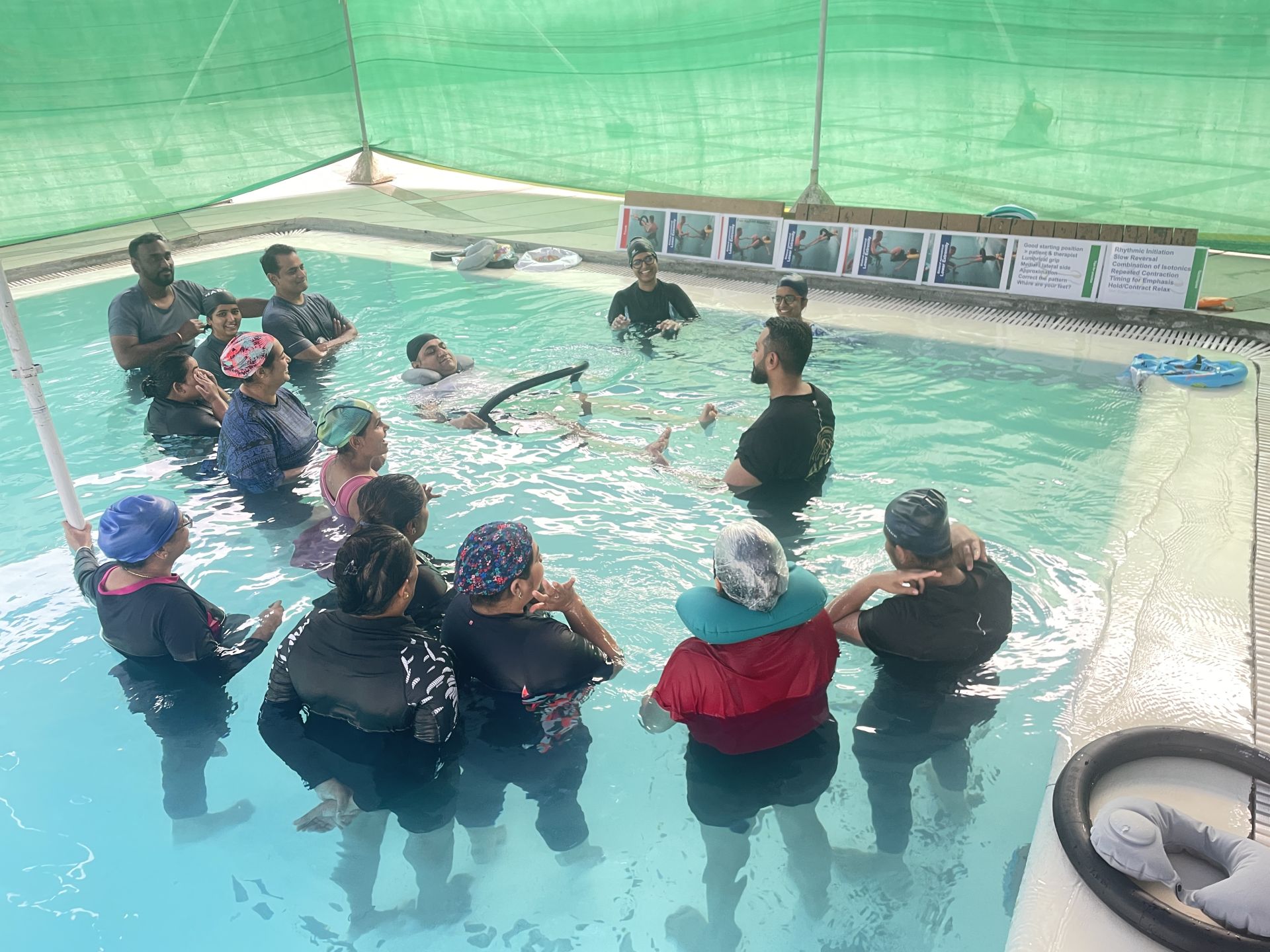
This is the third and last blog about the Bad Ragaz Ring Method, in which I will discuss one of our practical exam questions with you. In the two previous blogs, I explained the history, relation with other concepts, developments, and technical aspects; this post is about clinical reasoning. All topics are part of the training of our assistant lecturers.
The case:
- A patient with a Guillain Barré syndrome is recovering, but still shows weakness in the distal part of both lower extremities: 2/5. With which pattern can hip extensors, hip abductors, and knee flexors in the left leg be strengthened? Show.
- Show a technique with which you would increase the focus on strengthening for the internal rotators, combined with extensors of the hip, and include dose parameters.
- The nerve root inflammation often leads to a limitation of sliding properties of the nerve; in this case it’s the femoral nerve. How could the pattern be modified to “flos” the femoral nerve?
- In case the normal grip is too painful, how would you modify your grips for this pattern in this patient? Show and give reasons why.
Answers could be:
Ad 1. Both legs show (distal) weakness and therefore a bilateral symmetrical pattern will be chosen: extension-abduction-internal rotation. In this end position, knees are in extension, and feet in plantar flexion with eversion. This means that the starting position will be flexion-adduction-external rotation, see photos 2 and 3.
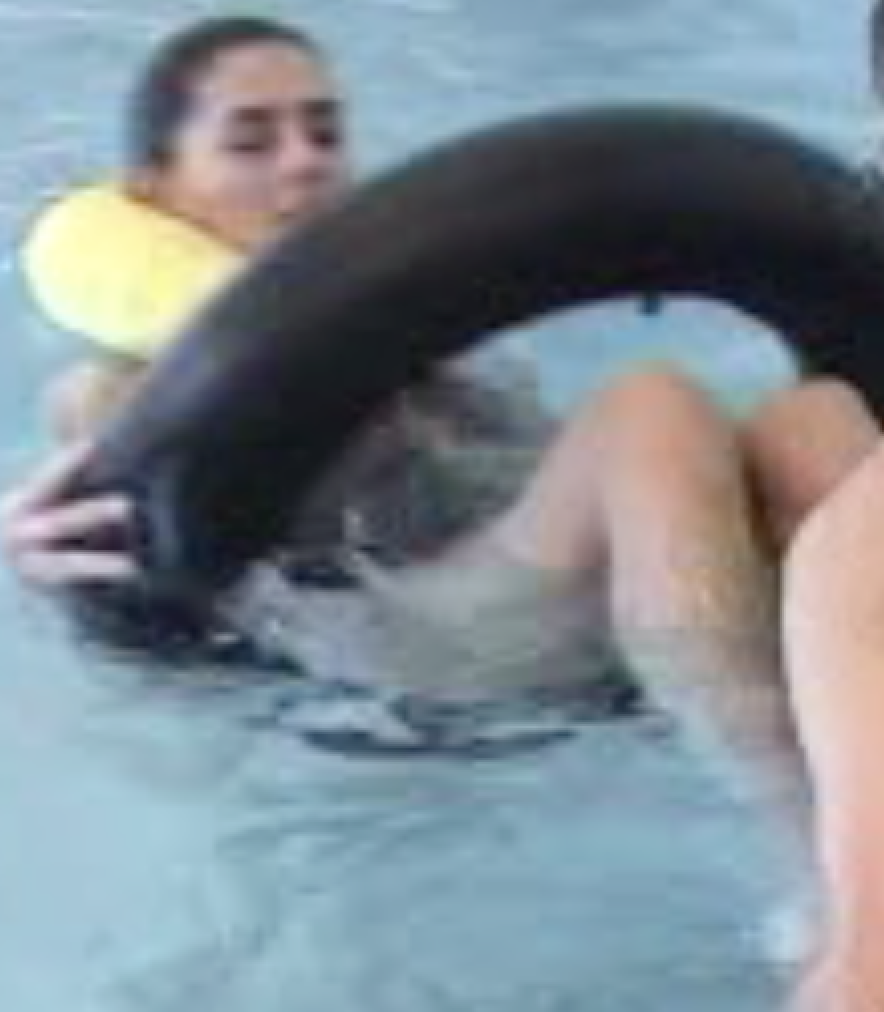
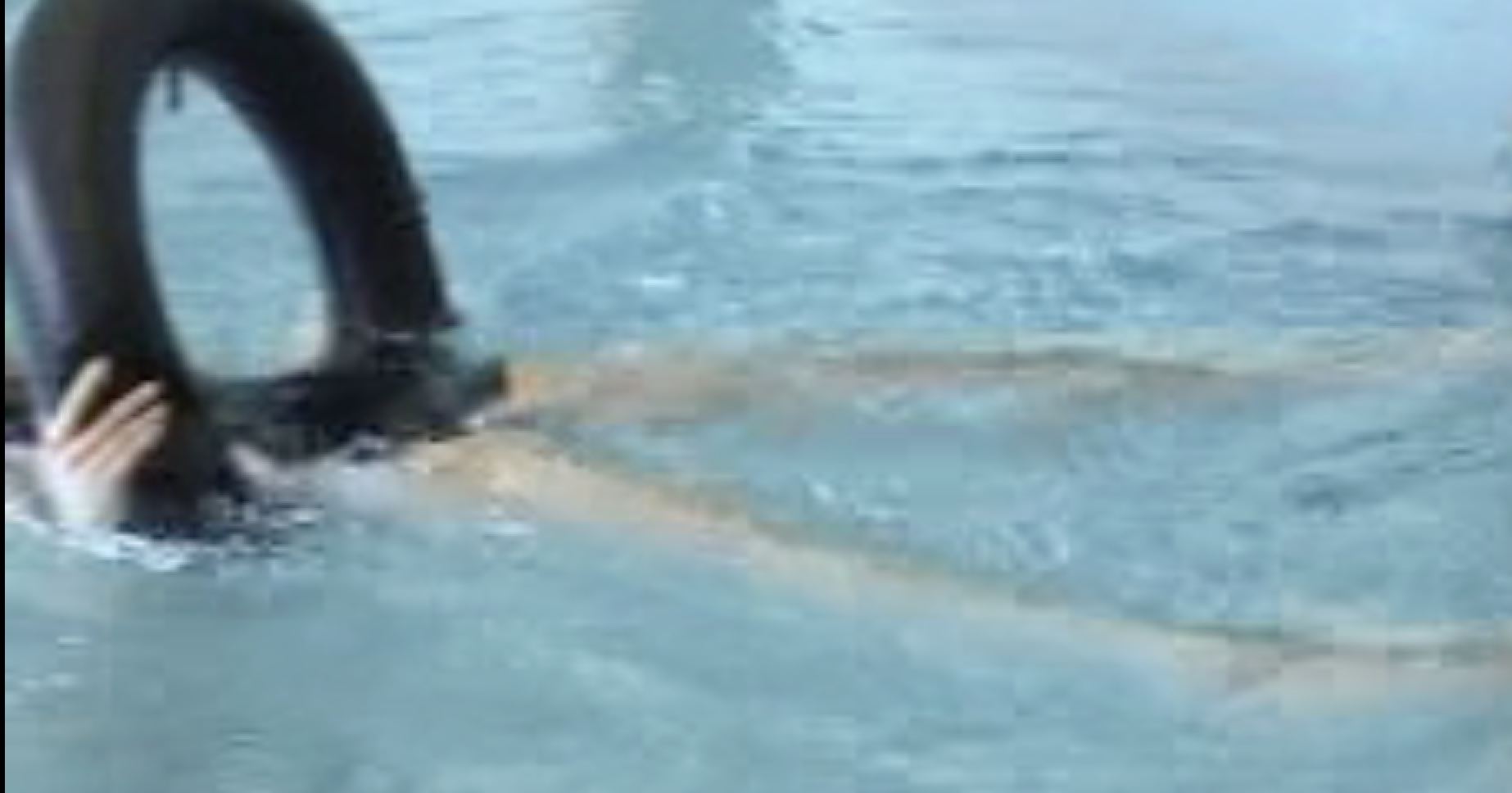
The knees will be in flexion, and the feet normally should be in dorsal flexion with supination. Therapist’s fingers should guide the feet from supination to eversion via pressure around the plantar area of metatarsal 1 (photo 4). The therapist gives a three-dimensional resistance against extension-abduction-internal rotation, which almost always is done incorrectly.
It's difficult to start in this starting position; therefore, we mostly start in the end position (photo 4) and combine the two opposite patterns.
Ad 2. Resistance is provided in only one or two directions belongs to the PNF technique timing for emphasis. The therapist isometrically prevents movements in the knee and foot as well in the direction of hip abduction.
Hip movement towards extension and internal rotation is allowed; the therapist allows a concentric contraction. To increase muscle activity, the therapist can include repeated contraction or combination of isotonics. PNF literature is not clear about dosing. Exercise physiology suggests using some 2 seconds for a concentric contraction and 4 seconds for an eccentric one, with about 10 reps. The total contraction duration of the isometric components might be about 15 seconds. A PNF perspective is to look at muscle fatigue: shorter contraction time, smaller range of movement, compensation (other muscles take over).
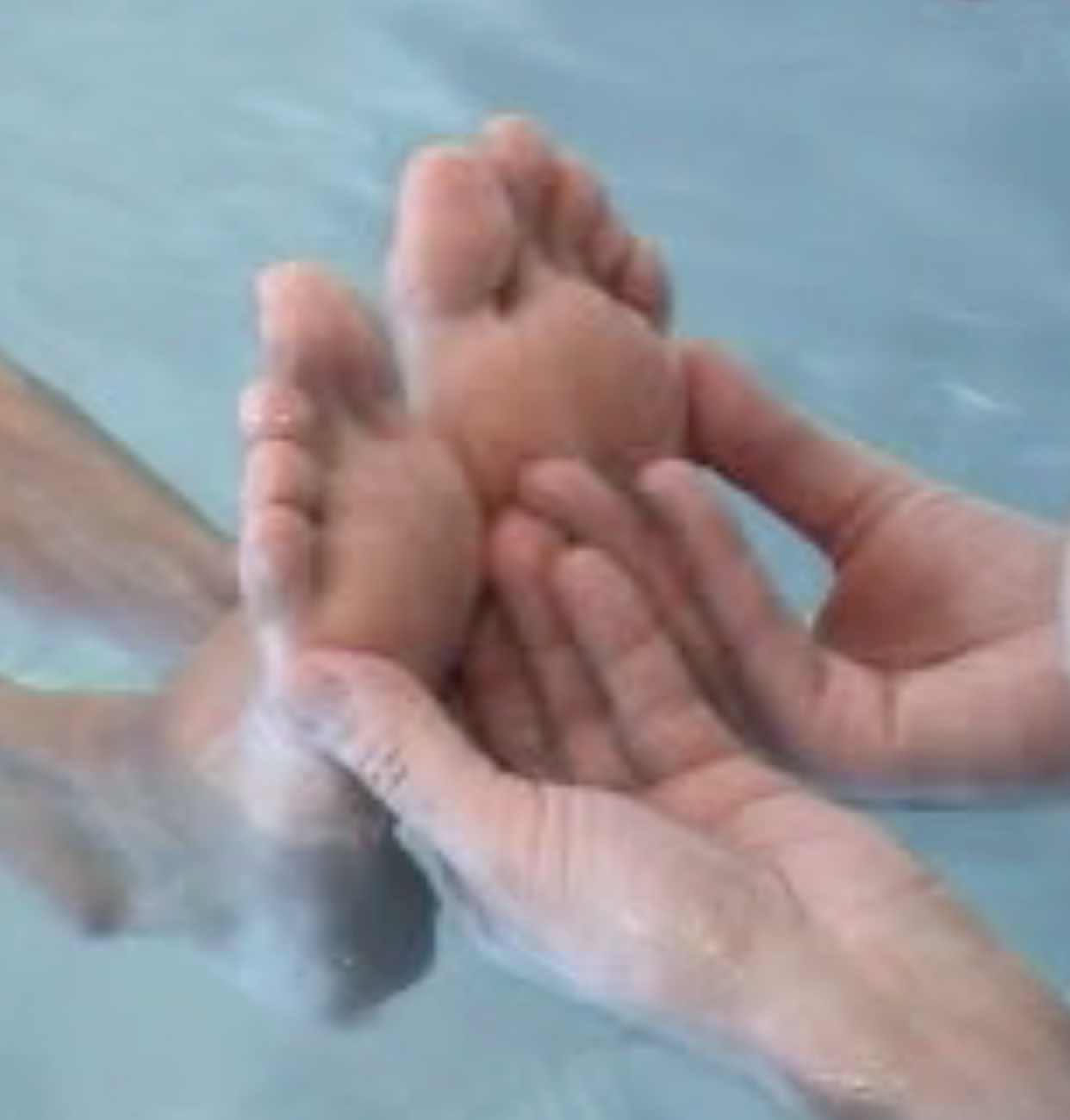
Ad 3. The regular pattern influences the facial structures connected to the femoral nerve: hip flexion shortens the structures and knee extension elongates the structures (the starting position). Hip extension and knee extension do the opposite (the end position): fascia moves according to neurodynamics. Dorsal flexion would add an extra shortening, and plantar flexion an extra elongation. Repeat the slides 5 to 15 times.
The client’s feet are weak, and may not influence sliding, but some knee flexion in the end position will add tension to the neural fascia: this would be the modification of choice.
Ad 4. This answer is the easiest one: hold around the ankles or even around the distal part of both lower legs.
Logically, our lecturers need to be able to have knowledge about all aspects of clinical reasoning that influence the PNF patterns and techniques. This takes proper guidance of the IATF Senior Lecturers and a vast experience with applying BRRM to clients.
What the research says (editor’s note)
- Stroke. In a randomized trial of 22 people with chronic stroke, adding the Bad Ragaz Ring Method to rehabilitation (3 days a week for 6 weeks) improved lower-leg muscle activation and balance more than rehabilitation alone.1
- Low back pain. In a 4-week pilot of community aquatic physiotherapy (44 adults with chronic low back pain), the BRRM group improved disability and trunk endurance and reported less pain. There was no land or no-treatment control group.2
- Knee osteoarthritis. In an observational study of 60 people with knee osteoarthritis treated in hot spring water, those who also received BRRM improved their WOMAC scores more. Patients were not randomized.3
The trials are small, and only one is randomized. The technique descriptions in this post are Johan Lambeck’s clinical teaching [Expert opinion].
Earlier in this series: Part 1 and Part 2.
Frequently asked questions
How can the therapist increase muscle activity in a BRRM pattern?
Add repeated contractions or a combination of isotonics (Lambeck, 2025).
Why start this pattern in the end position?
The starting position of this pattern is hard to begin from, so the therapist usually begins at the end position and combines the two opposite patterns (Lambeck, 2025).
References
Research cited in this post
- Cha HG, Shin YJ, Kim MK. Effects of the Bad Ragaz Ring Method on muscle activation of the lower limbs and balance ability in chronic stroke: A randomised controlled trial. Hong Kong Physiother J. 2017;37:39-45. doi:10.1016/j.hkpj.2017.02.001. PubMed: 30931045.
- So BCL, Ng JK, Au KCK. A 4-week community aquatic physiotherapy program with Ai Chi or Bad Ragaz Ring Method improves disability and trunk muscle endurance in adults with chronic low back pain: A pilot study. J Back Musculoskelet Rehabil. 2019;32(5):755-767. doi:10.3233/BMR-171059. PubMed: 30689551.
- Wang J, Chen Z, Chen X, Yang Y, Gan W, Wang F. Impact of Bad Ragaz ring in hot spring water on knee osteoarthritis: A prospective observational study. Medicine (Baltimore). 2023;102(32):e34457. doi:10.1097/MD.0000000000034457. PubMed: 37565912.
How to cite this article
First published May 22, 2025 on atuseminars.com · Last updated October 19, 2026 · Permanent URL: https://www.aquatictherapyuniversity.com/blog/the-bad-ragaz-ring-method-part-3
How to cite
Lambeck, J. (2025, May 22). The Bad Ragaz Ring Method, Part 3. From the Deep End. https://www.aquatictherapyuniversity.com/blog/the-bad-ragaz-ring-method-part-3
Permissions: You may quote and cite this article with attribution. Reproducing or adapting the full article requires written permission from the author, Johan Lambeck. To request permission, write to info@swimatu.com and we will pass your request along.
Copyright: © 2025 Johan Lambeck. Submitted by the author for publication by ATU Educational Services, LLC.
For education only; not a substitute for individual clinical judgment.