
From The Deep End · ATU Blog
Part 1 of 2Rheumatological disorders: Joint, tissue, and motor pain (Part 1 of 2)
Part 1: how buoyancy, viscosity and flow can be used at slow, fast and mixed speeds to ease swelling, build strength and improve motor control in rheumatologic disorders.
First published April 17, 2024 on atuseminars.comStiff, painful joints make people move less, and moving less makes the joints worse. In water you can break that cycle by choosing how fast, and in what direction, a patient moves.
This article first appeared in Advance for Physical Therapy. Part 1 covers the physics: buoyancy, viscosity and flow.
Want to go deeper? Explore the Aquatic Therapy for Arthritis, Osteoporosis & Sarcopenia course →
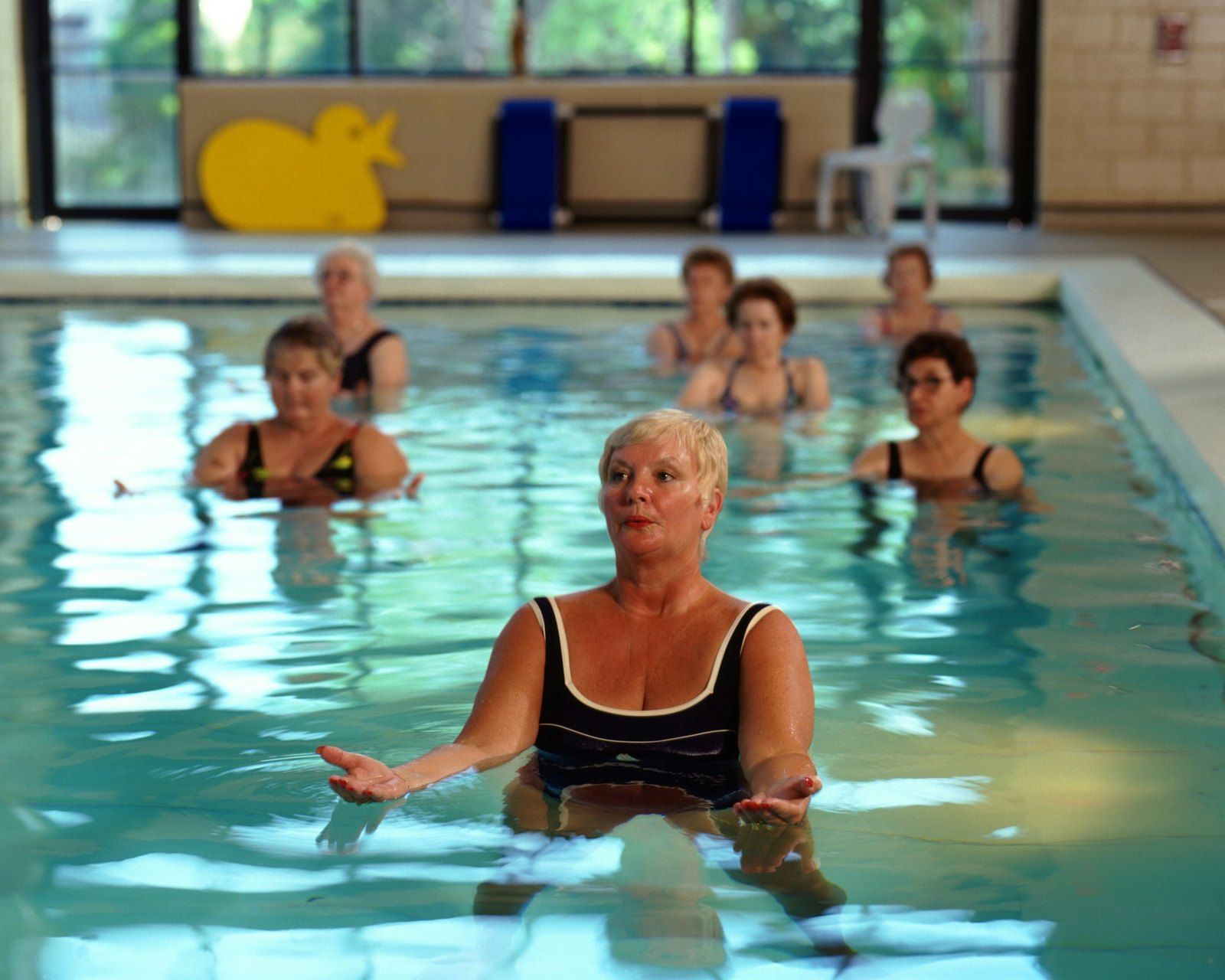
Published in Advance for Physical Therapy Magazine
Throughout this article, we will test the idea that aquatic therapy is an effective treatment for the impairments, functional limitations and disabilities commonly associated with rheumatic diseases. This article will address decreased joint and soft tissue swelling, inflammation and/or restriction; increased joint integrity and mobility; improved quality and quantity of movement; increased strength, power and endurance; and increased motor control and learning.
Building a Case
Patients with rheumatological disorders experience stiffness, complain of pain and weakness, and may self-limit movement. Pain produces a decrease in the quality and quantity of movement which subsequently produces more pain, stiffness, and weakness and further destruction of arthritic joints. The therapeutic pool offers a unique environment in which patients can improve both the resistance to and the assistance of movement.
Hypothesized benefits: Decreased joint and soft tissue swelling, inflammation and/or restriction. Increased joint integrity and mobility. Improved quality and quantity of movement between and across body segments. Increased strength, power and endurance. Increased motor function (motor control and motor learning).
Hypothesis: Slower-velocity activity and exercise in an aquatic environment lead to decreased joint and soft tissue swelling, inflammation and/or restriction, and increased joint integrity and mobility.
Rapid-velocity activity and exercise in an aquatic medium lead to increased strength, power and endurance.
Mixed-velocity activity and exercise in an aquatic environment lead to increased motor function (motor control and motor learning), and improved quality and quantity of movement between and across body segments.
Building an Argument
I. Hydrodynamic principles
Immersed bodies are affected by the buoyancy, viscosity, and flow of the water in which they are immersed. These properties combine to create a therapeutic environment in which the rheumatology patient can be treated.
Buoyancy. Archimedes'; principle states: "when a body is wholly or partially immersed in a fluid, it experiences an upthrust equal to the weight of fluid displaced." This upthrust, or buoyancy, counterbalances gravity and supports the body, resulting in an apparent reduction in weight bearing through the spine and lower extremities. Buoyancy can provide either assistance and support or resistance to movement of the body in the water, depending on the position of the individual.
Basically, buoyancy is an upward thrust which acts in the opposite direction to the force of gravity. Therefore, a body in water is subject to two opposing forces: gravity acting through a center of gravity (COG) and buoyancy acting through the center of buoyancy (COB). These forces, when not perfectly aligned, create a moment around a pivot point and the body rotates.
When discussing whether a body or body part immersed in water will sink or float, it is important to understand the concept of relative density (alternatively known as specific gravity). Relative density is "the ratio of the mass of an object to an equal volume of water." Water has a specific gravity equal to 1. It serves as the reference point for all objects. Objects with relative density less than water float, and those with relative density greater than water sink. Objects with relative density near the value of water hover just below the surface.
The human body has elements which tend to sink (dense muscle) and elements which tend to float (fatty tissue and air-filled lungs). This tendency to float counterbalances gravity and supports the body, resulting in an apparent reduction in weight. This reduction in weight can provide relief from compressive forces on painful joints. It is therefore possible for a person to stand, even walk, with reduced pain without external support or abnormal protective mechanisms in the water. Thus, the patient can initiate "normal" weight-bearing tasks such as gait, transfers, and balance drills in the water and offset any deconditioning effects of immobility or reduced movement.
As already mentioned, the relative density of water has been arbitrarily set at 1 (RD = 1). It follows then that if an object has a relative density greater than 1, the object will sink. There are many factors which will increase the relative density of an object, including:
Spastic limbs;
Bulky muscular body;
Tense fearful patient;
Kyphotic trunk alignment;
Disproportionate higher and lower trunk size (hydrocephalus);
Disproportionate limb/trunk ratio (short legs, long trunk, lower center of gravity);
Deflated lungs (RD = 1.05-1.084).
If relative density is less than 1, an object will float on the surface. There are many factors which decrease the relative density of an object, including flaccid limbs, high-adipose body, a relaxed patient and inflated lungs.
So, how can "buoyancy" create a therapeutic environment? For one, exercise in water produces less spinal and lower extremity joint compression than the identical exercise performed on land. This reduction in compression creates an environment in which weight bearing and joint compression (of the lower extremities and spine) can be applied in a graded or progressive manner by the therapist.
In conclusion, buoyancy can be used to decrease the fight against gravity's downward thrust by producing:
a decrease in weight bearing through joints;
a decrease in joint stress;
a decrease in splinting or guarding of antigravity muscles;
an increase in freedom of movement.
Buoyancy can also promote ease of handling of the large or heavy patient, allow access to body parts which would be inaccessible if the patient was positioned on a plinth or chair, and allow progression of resistance in a logical, graded fashion, from:
buoyancy-assisted (easiest);
buoyancy-eliminated (harder);
buoyancy-resisted (hardest).
Viscosity. Viscosity is nothing more than the inherent friction that exists between molecules of a liquid which cause a resistance to flow. Molecules of a liquid adhere to the surface of a body moving through that liquid resulting in resistance.
When examining the qualities of viscosity, it is important to remember that:
resistance increases as viscosity increases;
resistance to movement at a given velocity is greater in water than in air (fluid is more viscous than air);
viscosity decreases as temperature increases (the molecules separate).
It is possible to use viscosity therapeutically. Water is more viscous than air, and resistance to flow through water is greater than resistance to flow through air. Thus, it takes more force to push through water molecules than to push through air molecules. Additionally, the faster an object is pushed through the water, the more turbulence is created and this creates additional resistance to movement.
Flow. When an object moves through a fluid, there is an increase in the pressure in the front of an object combined with a reduction in pressure in the back. This results in the water wanting to move from an area of high pressure to an area of lower pressure. The area of "negative pressure" is known as the wake. Eddy currents form in this wake and "pull" the object back. The negative pressure (or drag) behind a moving object (the wake) is responsible for 90 percent of the impedance of movement. Surprisingly, the bow wave (the positive pressure in front of the object) is only responsible for 10 percent of the impedance. In a streamlined flow of a liquid, a thin layer of fluid molecules slide over one another. Resistance is directly proportional to the velocity of movement and no eddy currents are created. In unstreamlined (turbulent) flow of a liquid, there is an irregular, rapid, random movement of fluid molecules. Resistance is directly proportional to the velocity of movement squared and eddy currents are created.
The principle of flow can be used therapeutically to increase (or decrease) the ease of movement by creating positive and negative drag. Resistance can be altered by:
varying velocity of movement;
opposing inertia;
altering streamlining;
making quick reversals of flow (reversals in direction resulting in turbulence);
using rebound off the side of the pool.
It is also possible to use the concepts of flow to decrease resistance by taking advantage of the "pull" of wake or by performing movements in a more streamlined position.
Continued in Part 2. Read Part 2.
What newer research says
- Osteoarthritis. A Cochrane review found aquatic exercise gave a small, short-term improvement in pain, disability and quality of life in knee and hip osteoarthritis.8
- Inflammatory arthritis. A 2022 systematic review (9 studies, 604 people) found aquatic exercise helped pain, disease activity and physical function in rheumatoid arthritis and spondyloarthritis, but could not show it beats other exercise.9
The three speed hypotheses in this article are the author’s clinical reasoning [Expert opinion]; Part 2 reviews the early studies.
Frequently asked questions
How can buoyancy assist or resist movement?
It depends on body position: buoyancy can help and support a movement or work against it (Aquatic Therapy University, 2024).
What does fast movement in water build?
Strength, power and endurance (Aquatic Therapy University, 2024).
How does pain affect movement in arthritis?
Pain reduces how well and how much a person moves, which leads to more pain, stiffness and weakness and further joint damage (Aquatic Therapy University, 2024).
References
Studies discussed in Part 2
- Dial C, Windsor RA. A formative evaluation of a health education-water exercise program for class II and III adult rheumatoid arthritis patients. Patient Educ Couns. 1985;7(1):33-42. doi:10.1016/0738-3991(85)90017-5.
- Danneskiold-Samsøe B, Lyngberg K, Risum T, Telling M. The effect of water exercise therapy given to patients with rheumatoid arthritis. Scand J Rehabil Med. 1987;19(1):31-5. PubMed: 3576139.
- Bacon MC, Nicholson C, Binder H, White PH. Juvenile rheumatoid arthritis. Aquatic exercise and lower-extremity function. Arthritis Care Res. 1991;4(2):102-5. doi:10.1002/art.1790040207. PubMed: 11188589.
- Templeton MS, Booth DL, O'Kelly WD. Effects of aquatic therapy on joint flexibility and functional ability in subjects with rheumatic disease. J Orthop Sports Phys Ther. 1996;23(6):376-81. doi:10.2519/jospt.1996.23.6.376. PubMed: 8727018.
- Stenström CH, Lindell B, Swanberg E, Swanberg P, Harms-Ringdahl K, Nordemar R. Intensive dynamic training in water for rheumatoid arthritis functional class II--a long-term study of effects. Scand J Rheumatol. 1991;20(5):358-65. doi:10.3109/03009749109096812. PubMed: 1947899.
- Jentoft ES, Kvalvik AG, Mengshoel AM. Effects of pool-based and land-based aerobic exercise on women with fibromyalgia/chronic widespread muscle pain. Arthritis Rheum. 2001;45(1):42-7. doi:10.1002/1529-0131(200102)45:1<42::AID-ANR82>3.0.CO;2-A. PubMed: 11308060.
- Randomized controlled trialGreen J, McKenna F, Redfern EJ, Chamberlain MA. Home exercises are as effective as outpatient hydrotherapy for osteoarthritis of the hip. Br J Rheumatol. 1993;32(9):812-5. doi:10.1093/rheumatology/32.9.812. PubMed: 8369892.
Newer research
- Systematic review and meta-analysisBartels EM, Juhl CB, Christensen R, et al. Aquatic exercise for the treatment of knee and hip osteoarthritis. Cochrane Database Syst Rev. 2016;3(3):CD005523. doi:10.1002/14651858.CD005523.pub3. PubMed: 27007113.
- Systematic reviewMedrado LN, Mendonça MLM, Budib MB, Oliveira-Junior SA, Martinez PF. Effectiveness of aquatic exercise in the treatment of inflammatory arthritis: systematic review. Rheumatol Int. 2022;42(10):1681-1691. doi:10.1007/s00296-022-05145-w. PubMed: 35633390.
How to cite this article
First published April 17, 2024 on atuseminars.com · Last updated October 19, 2026 · Permanent URL: https://www.aquatictherapyuniversity.com/blog/rheumatological-disorders-joint-tissue-and-motor-pain-part-1
How to cite
Aquatic Therapy University. (2024, April 17). Rheumatological disorders: Joint, tissue, and motor pain (Part 1 of 2). Aquatic Therapy University Blog. ATU Educational Services, LLC. https://www.aquatictherapyuniversity.com/blog/rheumatological-disorders-joint-tissue-and-motor-pain-part-1
Permissions: You may quote and cite this article with attribution. Reproducing or adapting the full article requires written permission from ATU Educational Services, LLC.
For education only; not a substitute for individual clinical judgment.