
From The Deep End · ATU Blog
Part 2 of 2Five most common aquatic therapy myths for cardiopulmonary patients (Part 2 of 2)
Part 2: myths about aquatic exercise in COPD, paying for cardiopulmonary aquatic therapy, the need for costly equipment, and pool air quality.
First published August 7, 2024 on atuseminars.comPart 1 looked at what immersion does to the heart and lungs. Part 2 takes on four more myths that keep cardiopulmonary patients out of the pool.
Want to go deeper? Explore the Introduction to Aquatic Therapy: Cardiopulmonary Compromise course →
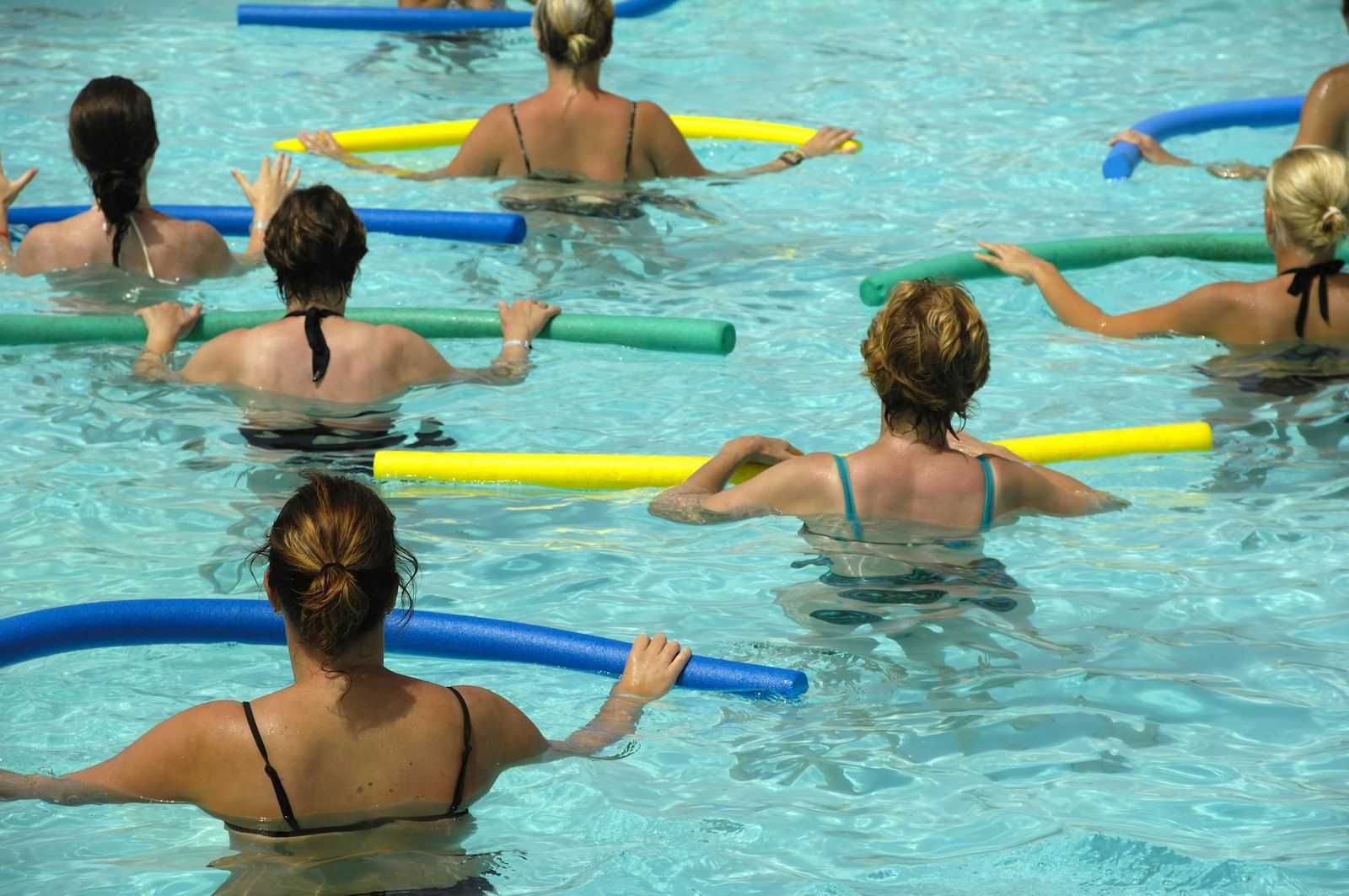
Part 1 covered what happens to the heart and lungs during immersion, and Myth #1. Read Part 1.
Myth #2. Aquatic exercise has been shown to produce dangerous stressors on the pulmonary system and should not be prescribed for the respiratory compromised client.
It’s true, immersion in water does dramatically affect the diaphragm, rib cage and lungs. And while this can be a bad thing (making it difficult for the patient to draw a breath if the water is too deep), it can also be easily converted into a good thing (a progressive resistive exercise program for strengthening the muscles of respiration).
As already discussed, the hydrostatic pressure of the water creates a large cephalic shift in blood. This blood floods the large vessels of the lungs, making it more difficult to draw a breath. In addition, the diaphragm is displaced upwards (due to hydrostatic pressure pushing on the abdomen), and the rib cage is restricted from expansion (due to hydrostatic pressure pushing on the rib cage). These three forces combine to create a 60% increase in the work of breathing when the person is immersed in neck-deep water.1
Even in the healthy client, passive immersion results in a 10% decrease in vital capacity and a 46% decrease in residual volume.8 Because the lung volume decreases (in part because the rib cage shrinks), airway resistance explodes by 58%.9 In addition, the central vascular engorgement seen in the cardiac system (as described above) influences lung volumes by reducing lung compliance and promoting gas trapping in the lungs.8
In the COPD client, passive immersion has been shown to produce a similar predictable effect: a 12% decrease in vital capacity, a 14% decline in forced expiratory volume—1 second, and an 18% decline in peak expiratory flow.8 Despite this, no acute respiratory attacks or other adverse reactions were seen.
But what happens when COPD patients start to exercise? Surely exercise in water must be contraindicated? Actually, no. Let’s look at what studies have shown about the effect of immersion plus exercise on the respiratory client.
Despite the mildly negative effects of immersion on lung function, head-out water immersion appears to be safe and well tolerated in patients with COPD. The authors of a 2011 systematic review postulate that the effect of hydrostatic pressure on the diaphragm may actually give the COPD patient a mechanical advantage for breathing, similar to that sought by patients in the “lean forward” position. They suggest that pools with graduated depths are ideal, allowing the patient to find the perfect level of immersion.8
The effect of the ambient air and water temperature and humidity in the aquatic setting is unknown. In general, the better the ventilation, the better for everyone. 8
Medications such as rescue inhalers should be brought poolside. Oxygen delivery systems should be secured and pulse oximetry may be necessary to determine oxygen response to immersion and exercise. 8
There is a lack of conclusive evidence about whether water-based exercise is MORE effective than its land-based counterpart. Several studies show more improvement in peak and endurance walking capacity with water exercise. Some studies also show an improvement in quality of life, but these results were not unanimous. The jury remains out on whether water based exercise is more effective, but it appears to be as effective and, more importantly, feasible and safe. 8
Aquatic exercise may be a growing option for COPD patients who are unable to exercise on land due to comorbidities or other reasons. 8
In conclusion, vertical aquatic exercise is safe, feasible and potentially more effective for the patient with COPD than its land-based counterpart. But who says working with the cardiopulmonary population in water is even billable?
Myth #3. Cardiopulmonary training – performed in water – is not a skilled intervention and cannot be billed to insurance.
We all expect to get paid for what we do with our patients… and health insurance companies expect us to explain why. Because the CPT code for aquatic therapy (97113) brings in higher payments than its land-based counterparts (such as 97110), insurance companies are extra vigilant about medical necessity.9 Because of this, providers must take extra pains to justify the use of water, note objective deficits in ADLs, ROM, mobility, strength, balance, etc., use pain scales and report pain’s impact on function, and specify the how and whys of the exercises given.10
Several questions need to be considered when documenting necessity of aquatic therapy for your cardiopulmonary patient. In addition to whether or not the patient has functional impairments and deficits that require skilled therapy, you need to justify that water has a therapeutic effect not attainable by your patient on land; that the gains in the pool will translate into function on land; and that research supports the efficacy of aquatic intervention.10 Payers want to know fun facts such as whether the therapy truly required the skill of a therapist’s intervention, whether a group class would be sufficient, and when the patient will be progressing to land-based exercise.10
“Fortunately” for the cardiopulmonary-compromised patient, the requirement of skilled intervention with exercise can be a safety issue alone. Therapists should clearly document if the patient is at risk for any cardiac or pulmonary event - this alone may justify the skill of a therapist.
Myth #4. Facilities must invest in expensive aquatic equipment in order to provide a challenging respiratory environment.
The most precious resource you should invest as an aquatic therapist is your imagination. Upkeep of a pool has its expenses, sure, but there is no need to purchase expensive cardiovascular equipment (such as treadmills or water bikes) in order to create a cardiopulmonary challenge. As already noted, just the immersion of the body creates a training effect of the cardiac and pulmonary systems.1,2 In addition, the viscosity of the water already provides resistance to movement, creating an elevation in heart rate; to increase the work load, simply speed up the movements.1
Looking for equipment ideas? Some simple, low-budget items can make a big difference. Consider stocking up on 1” PVC pipe (to create a progressive resistive exercise program for the expiratory muscles) and a dozen or so ping pong balls or egg flips to blow across the water to challenge the expiratory pressure and effort exerted by the respiratory patients.
Make use of buoyant objects of varying dimensions (balls, foam dumbbells, kickboards) to push down into the pool water; the effort engages the core, provides a strong platform for the diaphragm to function… and provides upper body strengthening to boot.
Yoga positions such as the Warrior poses, tree, and balancing half-moon performed during immersion couple respiratory work with balance and strengthening challenges… and are free.11 For more ideas like this, see Salzman’s column in Advance for PTs “Aquatic Therapy for COPD Patients? Why clinicians should believe in the power of the pool”.12
The more creative you are, the less money you need to spend on specialized equipment. So, save your money on expensive underwater treadmills and head to the local Dollar Store to stock up on equipment!
Myth #5. If your patient does not have respiratory compromise, the air quality in the pool area is not a health concern.
As kids we were told “don’t swim for 30 minutes after eating” lest we get sick.
Now as therapists, we can eat and swim all we want, but it is the air in our pool facility that may make us sick. Poorly ventilated pools are not just hazardous to patients with respiratory compromise; they are potentially dangerous for us as well.
How does this happen? Combined chloramines (trichloramine) are the byproduct of chlorine once it mixes with other chemicals and sweat.13 Trichloramine creeps its way off the pool surface into the air and finds its way into the respiratory tracts of people in the pool and those sitting on the side of the pool.14 Kappel discusses how the disinfection byproducts, or DPIs, in the air of a natatorium that is not well ventilated should be of more concern than our previous focus of "recreational waterborne illnesses."13
Looking for further proof of the potential risks of poor ventilation in indoor pools? A 2004 study examined the effects that exercising in and around heavily chlorinated water; the study tested the subjects for exercise-induced bronchoconstriction.15 The research investigated what would happen to subjects exercising in the pool versus subjects running or cycling on the deck with pool chlorine concentrations being 0.0ppm, 0.5ppm, and 1.0ppm, respectively. The subjects’ forced expiratory volumes (FEV1) fell about 20% at 0.5ppm and 60% at 1.0ppm. You might think that makes sense for the person in the pool, but it was the same for the subjects on the deck, those who were not even touching the water!
In other words, the poorly ventilated pool can be quite hazardous to anyone's respiratory health, regardless of pathology. In our attempt to "go green" and make buildings more energy efficient for tax deductions, we have compromised the inflow of fresh air to our indoor pool environments…. and created a risk for respiratory toxicity.
Conclusion
Don’t let unfounded rumors stop you from choosing aquatic therapy for your patients with cardiac or pulmonary compromise. Instead, take a citation-supported walk through the literature to destroy the most pervasive myths about this topic. Then take a breath, let it out (through pursed lips, of course) and put on your suit. It’s time to get those cardiopulmonary compromised patients in the pool!
Frequently asked questions
Is immersion safe for patients with COPD?
It appears so. Lung function drops a little in water, but head-out immersion seems safe and well tolerated in COPD (Aquatic Therapy University, 2024).
What does hydrostatic pressure do to blood flow?
It pushes a large volume of blood up toward the chest (Aquatic Therapy University, 2024).
References
- Becker, B. (2009). Aquatic therapy: Scientific foundations and clinical rehabilitation applications. PMR, 1(9), 859-863.
- Meyer, K., & Leblanc, M.-C. (2008). Aquatic therapies in patients with compromised left ventricular function and heart failure. Clinical & Investigative Medicine. 31(2):E90-E97.
- Magder, S., Linnarsson, D., and Gullstrand, L. (1981). The effect of swimming on patients with ischemic heart disease. Circulation, 63:979-986.
- Heigenhauser, G. F., Boulet, D., Miller, B., & Faulkner, J. A. (1977). Cardiac outputs of post-myocardial infarction patients during swimming and cyclic. Medicine and Science in Sports, 9(3), 143–147.
- McMurrary, R. G., Fieselman, C., Avery, K. E., & Sheps, D. S. (1988). Exercise hemodynamics in water and on land in patients with coronary artery disease. Journal of Cardiopulmonary Rehabilitation, 8(2), 69–75.
- Lehmann, M., Sodar, H., Dürr, H., Samek, L., Gastmann, U., & Keul, J. (1988). [Behavior of heart rate, blood pressure, lactate, glucose, noradrenaline and adrenaline level in coronary heart disease patients in the course of light swimming stress]. Zeitschrift für Kardiologie, 77(8), 508–14.
- Tei, C., Tanaka, N. (1996). Comprehensive therapy for congestive heart failure: A novel approach incorporating thermal vasodilation. Intern Med, 35, 67-69.
- McNamara, R. J. (2009). Water-based exercise training for chronic obstructive pulmonary disease. (J. A. Alison, Ed.)Cochrane Database of Systematic Reviews, (2). Retrieved from http://search.ebscohost.com/login.aspx?direct=true&db=chh&AN=CD008290&site=ehost-live
- Salzman, A. (2013, March 11). Why water? a decision matrix for aquatic therapy. Advance for Physical Therapy and Rehab Medicine, Retrieved from http://www.physical-therapy.advanceweb.com/Columns/Water-Wisdom/Why-Water-A-Decision-Matrix-for-Aquatic-Therapy.aspx
- Salzman, A. (2012, August 3). Documentation of medical necessity for aquatic therapy: A greater hurdle than for therapeutic exercise. The Aquatic Therapist [Blog]. Archived at https://web.archive.org/web/20170203102304/http://www.aquatictherapist.com/index/2012/08/documentation-of-medical-necessity-for-aquatic-therapy-a-greater-hurdle-than-for-therapeutic-exercis.html
- Drake, M., and Brown, K. (n.d.).Yoga in the pool. Canadian Living, Retrieved from http://www.canadianliving.com/health/mind_and_spirit/yoga_in_the_pool.php
- Salzman, A. (2013). Aquatic Therapy for COPD Patients? Why clinicians should believe in the power of the pool. Advance for Physical Therapy & Rehab Medicine, Retrieved from http://physical-therapy.advanceweb.com/Columns/Water-Wisdom/Aquatic-Therapy-for-COPD-Patients.aspx
- Kappel, R. (2008, June). Watered down: One. Aquatics International, Retrieved from http://www.aquaticsintl.com/air-quality/watered-down-one.aspx
- Smith, M. (2007, March 30). Swimming pool air may be hazardous. Retrieved from http://www.medpagetoday.com/Pulmonology/Asthma/5359
- Mees, P. (2004). Breathing easier in the pool. Physician and Sportsmedicine, 32(7).
How to cite this article
First published August 7, 2024 on atuseminars.com · Last updated October 19, 2026 · Permanent URL: https://www.aquatictherapyuniversity.com/blog/five-most-common-aquatic-therapy-myths-for-cardiopulmonary-part-2
How to cite
Aquatic Therapy University. (2024, August 7). Five most common aquatic therapy myths for cardiopulmonary patients (Part 2 of 2). Aquatic Therapy University Blog. ATU Educational Services, LLC. https://www.aquatictherapyuniversity.com/blog/five-most-common-aquatic-therapy-myths-for-cardiopulmonary-part-2
Permissions: You may quote and cite this article with attribution. Reproducing or adapting the full article requires written permission from ATU Educational Services, LLC.
For education only; not a substitute for individual clinical judgment.