
From The Deep End · ATU Blog
Top Reasons Aquatic Therapy Will Disappear in the Next Decade
Five threats to the future of aquatic therapy, from how insurers see the pool to research without a plan and therapists who stay on deck.
First published February 12, 2024 on atuseminars.comThe title is meant to provoke, but the concerns are real. Here are the five forces we believe threaten aquatic therapy, unless someone does something about them.
Want to go deeper? Explore the Documentation & Billing for Aquatic Therapy Practice course →
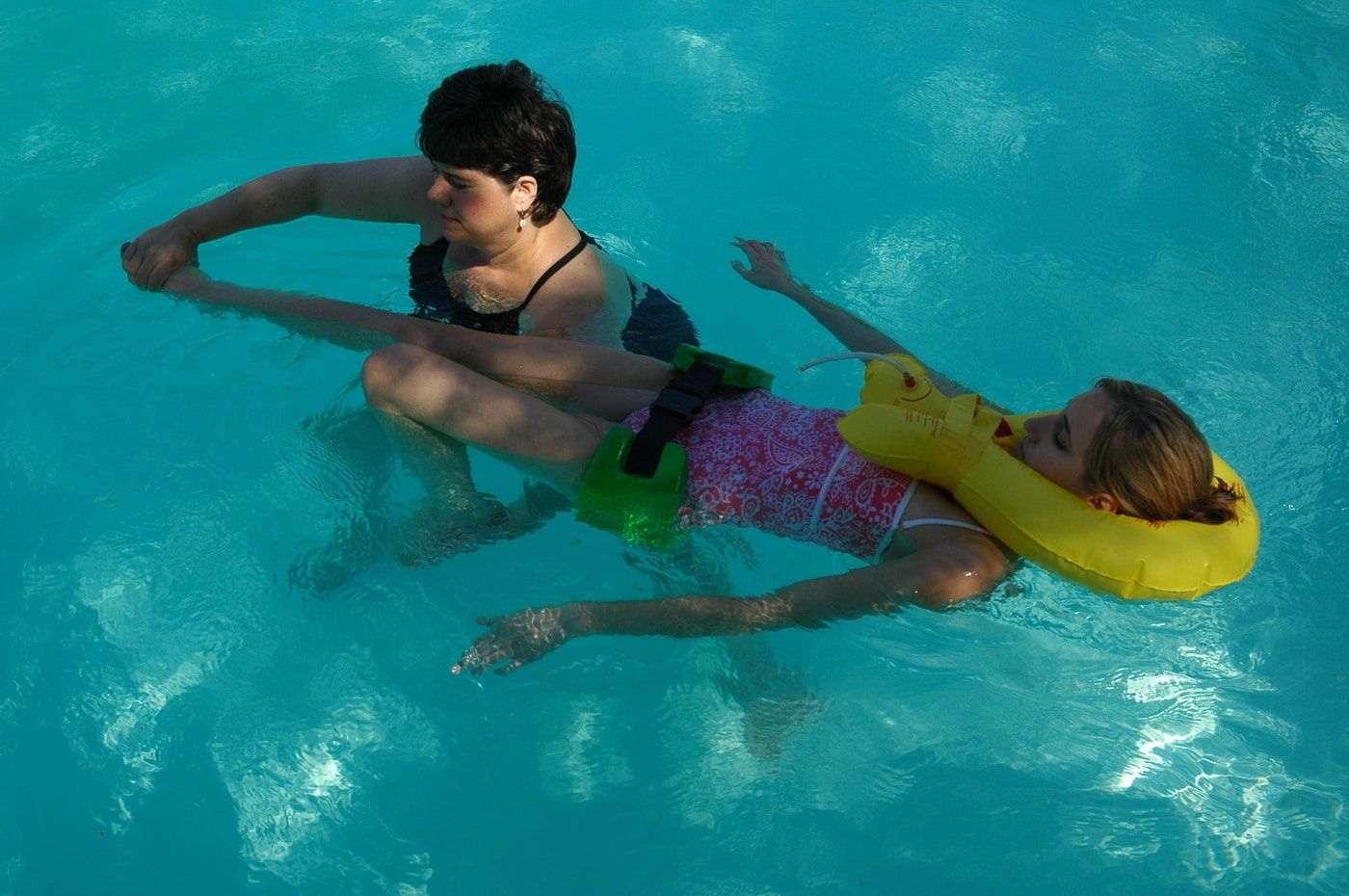
(unless someone does something about it)
Insurance Companies Think Water is For the Weak. Insurance companies see the pool through the lens of "buoyancy". In other words, they see it as a place of ease. Their descriptions of the quintessential sample patients for whom aquatic therapy is medically necessary reads like a who's who of decrepitude. Sample of the perfect pool patient: "New amputee who is unable to perform gait training on land because he is too weak post- amputation." Sample: "Multiple sclerosis patient who is too weak to stand". These very sick or very debilitated patients may need the pool, but they are certainly not the only ones. Tell an insurer that aquatics is the place for end-of-rehab training and you will get a hearty guffaw and a quick denial. They do not understand hydrostatic pressure, nor viscosity. They do not understand the pool can be a challenging place to work.
Aquatic Therapy Has Its Own Reimbursement Code. The American Medical Association has given "aquatic therapy" its own billing code (97113). On the face of it, this sounds lovely. The code is even reimbursed at a higher rate. Therein lies the rub. Because payers reimburse at a substantially higher rate for "aquatic therapy" than they do for "therapeutic exercise" or any other land-based therapy, they have the power to deny its use unless (get this) research shows that aquatics is BETTER than land- based therapy. Not equal. Not untested. But research must show that it is statistically better.
Insurance Companies Are Making Decisions Based on Old Information. The Independent Medical Reviews that are being done by physicians at the request of payers (especially Worker's Compensation) arewoefully behind the times. These reviews are being used to do two things: 1. Generate local coverage determinations and Generate a concept of "medical necessity" for aquatic therapy. Well, garbage in means garbage out. The decisions that are being made by payers (typically, that aquatic therapy is not necessary) are often based on old or outdated understanding of aquatic therapy. Because of this, aquatic therapy is being suggested only in very limited circumstances (see #1 above).
Researchers Are All Doing Their Own Thing. Much of the aquatic therapy research that is done today is too imaginative. The researchers continue to try and re-create the wheel every time they do a study. There is no priorities list of which populations should be studied (an easy enough list to create based on census) and there is no "template" offered to the researchers. A template is essential. Why? In order for a systematic review to say anything (at all) there has to be enough studies with a similar "frame" to examine. If everyone looks at different populations and uses different outcome tools, it becomes very difficult to have a systematic review conclusion other than "Do better studies, people!"
Too Many Therapists Wear Polo Shirts to Work. So far, all 4 reasons for the potential demise of aquatic therapy are derived from external forces. Unfortunately, the 5th reason is not. We are partially responsible for aquatic therapy being seen as an unskilled treatment. Too many therapists who perform aquatic therapy do not get in the pool. Now, this is a mixed bag. Many therapists do get in the water. But loads of rehab clinics are set-up so that it is impossible from a scheduling standpoint for the treating therapist to get in the pool. This results in therapy that looks and feels like poorly done fitness instruction. There is no skill to it and there is no "power" to it. Patients are not wowed and they do not understand the potential of the pool.
What the research says
Two of these five forces show up in the research itself:
- “Better than land” is a high bar. The Cochrane review for knee and hip osteoarthritis found aquatic exercise gives small, short-term gains in pain and disability compared with no exercise.1 A later meta-analysis found no significant difference between aquatic and land exercise.2 Equal results are a fair reason to choose the pool. They are also exactly the problem when a payer demands “better.”
- Researchers are doing their own thing. A review of Parkinson’s trials found programs so varied and often under-dosed that the best dose could not be confirmed.3
Frequently asked questions
Is aquatic therapy research too imaginative?
Often, yes. Too many studies reinvent the wheel instead of building on shared methods (Aquatic Therapy University, 2024).
Will insurers pay for end-of-rehab aquatic training?
Rarely. Most insurers will laugh at the idea and deny the claim quickly (Aquatic Therapy University, 2024).
References
Research cited in this post
- Systematic review and meta-analysisBartels EM, Juhl CB, Christensen R, et al. Aquatic exercise for the treatment of knee and hip osteoarthritis. Cochrane Database Syst Rev. 2016;3(3):CD005523. doi:10.1002/14651858.CD005523.pub3. PubMed: 27007113.
- Systematic review and meta-analysisXu Z, Wang Y, Zhang Y, Lu Y, Wen Y. Efficacy and safety of aquatic exercise in knee osteoarthritis: A systematic review and meta-analysis of randomized controlled trials. Clin Rehabil. 2023;37(3):330-347. doi:10.1177/02692155221134240. PubMed: 36320162.
- Systematic review and meta-analysisCarroll LM, Morris ME, O'Connor WT, Clifford AM. Is Aquatic Therapy Optimally Prescribed for Parkinson's Disease? A Systematic Review and Meta-Analysis. J Parkinsons Dis. 2020;10(1):59-76. doi:10.3233/JPD-191784. PubMed: 31815701.
How to cite this article
First published February 12, 2024 on atuseminars.com · Last updated October 19, 2026 · Permanent URL: https://www.aquatictherapyuniversity.com/blog/top-reasons-aquatic-therapy-will-disappear-in-the-next
How to cite
Aquatic Therapy University. (2024, February 12). Top Reasons Aquatic Therapy Will Disappear in the Next Decade. Aquatic Therapy University Blog. ATU Educational Services, LLC. https://www.aquatictherapyuniversity.com/blog/top-reasons-aquatic-therapy-will-disappear-in-the-next
Permissions: You may quote and cite this article with attribution. Reproducing or adapting the full article requires written permission from ATU Educational Services, LLC.
For education only; not a substitute for individual clinical judgment.