
From The Deep End · ATU Blog
For the Children: Taking your pediatric patient into the therapy pool
Precautions, techniques and goals for bringing a child into the therapy pool, plus how to explain pediatric therapy in plain language.
First published July 17, 2024 on atuseminars.comPayers look at a child in the pool and see swim lessons. Your job is to show them skilled therapy. Here are the precautions, techniques and goals that make the case.
Want to go deeper? Explore the Pediatric Aquatic Therapy bundle →
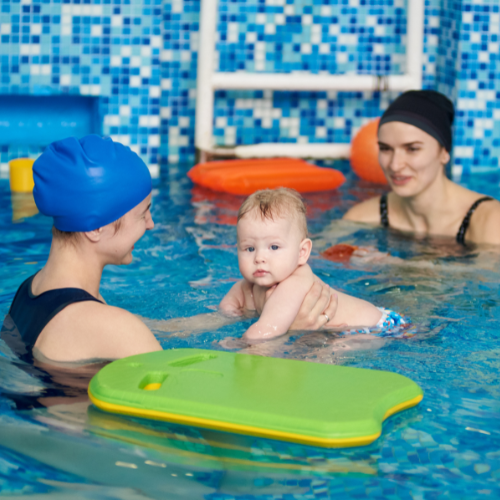
Therapists who work in the water have a difficult task. Not only must they understand the nuances of their patients' diagnoses, but they must understand all the technical distinctions that come from working in a unique environment: the pool.
In addition, there is more of a call for justification for aquatic therapy than for garden-variety physical therapy. Payers may look at the pool and think of synchronized swimming, of water aerobics, of learn-to-swim lessons, of just about everything but skilled intervention. Consequently, they want therapists to make a strong case for taking a patient into the water.
Objectives
First, describe pediatric language in lay terms to increase patient understanding. The pediatric population is usually defined as children and teenagers under 18 years.
Second, identify precautions and contraindications to exercise in a therapy pool for the pediatric patient. Note that precautions and contraindications that are general to the public at large are not listed here.
- Children are not able to perspire and dissipate heat as well as adults, so keep the pace down. Also, they are usually deficient in anaerobic capacity, so modify the workout.
- Children with high tone, spasticity or rigidity may show an increase in these tone problems because of the lack of a stable base and normal gravity-based environment in the water.
- Identify techniques and specific treatment parameters for designing an aquatic therapy program for the pediatric patient.
Techniques and Specifics
The key is to encourage fun and not just exercise. Music and games should be used promote goals (relaxation vs. facilitation). Programming should include both mind and body (e.g., sensory integration), including:
- Sensation (rhythm, balance);
- Emotions (e.g., through body movement);
- Creativity (i.e., conceiving images, thoughts, situations);
- Imagery (i.e., storytelling in workout movement patterns);
- Relaxation training.
Activities should be varied constantly, and ideally should be discontinued in the middle of the fun, so the patient will want to continue. Make use of equipment, from inner tubes to kickboards, frisbees to balls, basketball hoops to sinkable toys, as well as traditional aquatic equipment. Other tips include keeping the shallow end of the pool shallower than 3 feet, and keeping the pool full of relatively warm water to promote increased attention.
What are the goals of aquatic therapy?
Your goals for the pediatric patient in aquatic therapy should include most or all of the following:
- Improvement in flexibility;
- Improvement in strength;
- Improvement in balance, reaction time and safety during ambulation;
- Improvement in gait parameters;
- Improvement in ability to perform ADLs;
- Improvement in exercise tolerance;
- Decrease in abnormal tone and synergistic patterns;
- Improvement in head and trunk control;
- Improvement in perceptual and spatial relations (e.g., body awareness, midline concept, distance/depth perception, eye-hand coordination);
- Improvement in oral/facial control;
- Reduction in tactile defensiveness/hypersensitivity;
- Decrease in fatiguability;
- Decrease in complaints of pain;
- Improvement in cardiopulmonary fitness;
- Improvement in skill and coordination through sports;
- Compliance with attendance and willingness to learn and execute an aquatic program.
What are the benefits of aquatic therapy?
- Application of weight bearing in a graded or progressive manner;
- Increase in proprioceptive awareness during exercise and functional task simulation;
- Application of resistance in a graded or progressive manner;
- Assistance in limb movements against gravity (assisted by buoyancy);
- Encouragement of socialization in a "normal" recreational environment that offers noncompetitive fun and socialization;
- Provision of a safe environment;
- Retardation of muscle atrophy and contractures, which may occur in the absence of exercise;
- Decrease in muscle tone and spacticity (if water is thermoneutral or warmer);
- Provision of an environment that can eventually be barrier free and free of assistive devices;
- Provision of an environment in which it is possible to treat multiple problems at once without seeming like "work" to the child;
- Provision of safety education in water to promote follow-through as adults.
What the research says
- Cerebral palsy. A 2025 meta-analysis of 15 trials (369 children) found low-quality evidence that aquatic physical therapy improved gross motor function more than land exercise, with a small effect.1
- Water skills. A 2024 meta-analysis in children with neurodevelopmental disorders found aquatic therapy improved Halliwick-based water-readiness skills, such as mental adjustment, rotation and balance control, more than land exercise.2
Most trials are small. The precautions and goals in this post are clinical guidance [Expert opinion].
Frequently asked questions
What are the goals of pediatric aquatic therapy?
Flexibility, strength, balance and safe walking, gait, daily activities, exercise tolerance, and less abnormal tone (Aquatic Therapy University, 2024).
What are the benefits of aquatic therapy for children?
They include graded, progressive weight bearing and better body awareness during exercise and functional tasks (Aquatic Therapy University, 2024).
Can water increase tone problems in children with spasticity?
Yes. Without a stable base and normal gravity, tone problems may increase (Aquatic Therapy University, 2024).
What is the key to pediatric aquatic sessions?
Making it fun, not just exercise (Aquatic Therapy University, 2024).
References
Research cited in this post
- Systematic review and meta-analysisPauluka E, Ceolin LS, Fontanela LC, Dos Santos AN. Aquatic Compared With Land-Based Exercises on Gross Motor Function of Children/Adolescents With Cerebral Palsy: A Systematic Review With Meta-Analysis. Child Care Health Dev. 2025;51(1):e70023. doi:10.1111/cch.70023. PubMed: 39688349.
- Systematic review and meta-analysisShariat A, Najafabadi MG, Dos Santos IK, et al. The Effectiveness of Aquatic Therapy on Motor and Social Skill as Well as Executive Function in Children With Neurodevelopmental Disorder: A Systematic Review and Meta-analysis. Arch Phys Med Rehabil. 2024;105(5):1000-1007. doi:10.1016/j.apmr.2023.08.025. PubMed: 37690741.
How to cite this article
First published July 17, 2024 on atuseminars.com · Last updated October 19, 2026 · Permanent URL: https://www.aquatictherapyuniversity.com/blog/for-the-children-taking-your-pediatric-patient-into-the
How to cite
Aquatic Therapy University. (2024, July 17). For the Children: Taking your pediatric patient into the therapy pool. Aquatic Therapy University Blog. ATU Educational Services, LLC. https://www.aquatictherapyuniversity.com/blog/for-the-children-taking-your-pediatric-patient-into-the
Permissions: You may quote and cite this article with attribution. Reproducing or adapting the full article requires written permission from ATU Educational Services, LLC.
For education only; not a substitute for individual clinical judgment.