
From The Deep End · ATU Blog
Find Your Zen: Watsu
Where Watsu came from, how a passive warm-water session works, and why the main equipment you need is your own body.
First published December 20, 2023 on atuseminars.comWatsu is a hands-on technique that many aquatic facilities can offer. Here is a short look at where it came from, how a session works and what you need to get started.
Want to go deeper? Explore the Aquatic Therapy Essentials (Bootcamp) bundle →
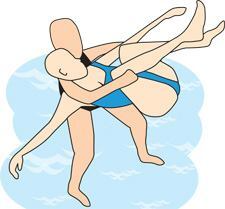
One of the most powerful techniques used in aquatic therapy today owes its origins to a poet and massage therapist.
Watsu was developed by Harold Dull in 1980 and has developed into its current presentation over time. Birthed from a mixture of Zen Shiatsu and its creator’s natural affinity for water, the term Watsu was coined from the phrase “Water Shiatsu.”
Watsu is performed in a warm-water pool and is a wholly passive technique. Each session begins with the practitioner establishing a connection between the patient’s breathing and the way the body is moved in and by the water. Watsu is always performed in a hands-on manner by the provider.
The client is usually held or cradled in warm water while the provider stabilizes or moves one segment of the body, resulting in a stretch of another segment due to the drag effect. The client remains completely passive while the provider combines the unique qualities of the water with rhythmic flow patterns, which attempt to facilitate improvements in the body’s neurological, musculoskeletal, cardiorespiratory, metabolic and psychosocial systems.
There is no special equipment to purchase for Watsu. Instead, the therapist’s body becomes the treatment equipment, and the water itself becomes a treatment table. However, Watsu is a very size-dependent technique. Smaller therapists many need a set of flotation cuffs — or even a half noodle — to successfully manage...Continue Reading Original Article Here
Frequently asked questions
Who developed Watsu?
Harold Dull, a poet and massage therapist, created Watsu in 1980 (Salzman, 2023).
Is Watsu an active or a passive technique?
Passive. The client does no active work; the practitioner moves the client through the water, always hands-on (Salzman, 2023).
Do you need special equipment for Watsu?
No. The therapist's own body acts as the equipment and the water acts as the treatment table, although smaller therapists may want flotation cuffs or a half noodle (Salzman, 2023).
References
- Tufekcioglu, E., Arslan, D., Konukman, F., Zagorski, T., Al Batti, T., Filiz, B., ... & Yilmaz, E. B. (2023). The Aquatic WATSU® Therapy Program Improves the Quality of Life of an Adult Male with Autism Spectrum Disorder. A Case Report. Physical Culture and Sport. Studies and Research, 99(1), 11-20.
- Andrejeva, J., Mockute, E., Sniepiene, G., Malyško, E., Istomina, N., & Hendrixson, V. (2023). The Impact of WATSU as physiotherapy Method on fatigue for people Diagnosed with Multiple sclerosis. Acta balneologica, 65(1), 15-24.
- Arafat, S. (2023, August). Analysis of HRV and Blood Pressure Variables of Obese Male Subjects After Aquatic Therapies. In Proceedings of the International Conference on Advanced Technologies (Vol. 11, pp. 204-206).
- Schitter, A. M., Radlinger, L., Kurpiers, N., & Frei, P. (2022). Application areas and effects of aquatic therapy WATSU–A survey among practitioners. Complementary Therapies in Clinical Practice, 46, 101513.
- Loureiro, A. P. C., Burkot, J., Oliveira, J., & Barbosa, J. M. (2022). WATSU therapy for individuals with Parkinson's disease to improve quality of sleep and quality of life: A randomized controlled study. Complementary Therapies in Clinical Practice, 46, 101523.
How to cite this article
First published December 20, 2023 on atuseminars.com · Last updated October 19, 2026 · Permanent URL: https://www.aquatictherapyuniversity.com/blog/find-your-zen-watsu
How to cite
Salzman, A. (2023, December 20). Find Your Zen: Watsu. Aquatic Therapy University Blog. ATU Educational Services, LLC. https://www.aquatictherapyuniversity.com/blog/find-your-zen-watsu
Permissions: You may quote and cite this article with attribution. Reproducing or adapting the full article requires written permission from ATU Educational Services, LLC.
For education only; not a substitute for individual clinical judgment.