

From the Deep End · ATU Articles & Commentary
Careful Planning: Taking the systemic or metabolically challenged patient into the water
How to screen, set goals and design a safe aquatic program for patients with systemic or metabolic conditions such as high-risk pregnancy, obesity and diabetes.
First published June 12, 2024 on atuseminars.comGlucose tablets on the pool deck, an IV resting on a kickboard, aquasocks on every diabetic foot. Planning for systemic and metabolic patients is mostly about the small things you set up before anyone gets wet.
This post covers screening, goals and program design for high-risk pregnancy, obesity, diabetes and immune disorders.
Want to go deeper? Explore the Aquatic Therapy Precautions and Contraindications overview →
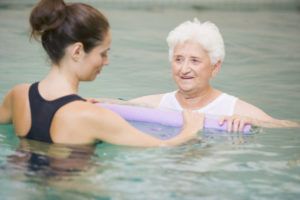
Therapists who work in the water have a difficult task. Not only must they understand the nuances of their patients'; diagnoses, but they must understand all the technical distinctions that come from working in a unique environment: the pool.
In addition, there is more of a call for "justification" for aquatic therapy than for garden-variety physical therapy. Payers want therapists to make a strong case for taking a patient into the water.
Know Your Terms
Always describe systemic or metabolically challenged language in lay terms to increase patient understanding. A high-risk pregnancy, for example, can refer to a condition known as placenta previa, or placenta that is implanted in the lower uterine segment, or a multiple pregnancy (twins or more).
In addition to pregnancy, other patients with systemic or metabolical disorders might include those who are obese (a body mass index of 30 or more); or those with diabetes mellitus, or immunosuppresive disorders (including AIDS), which refers to any disorder which acts to prevent the formation of an immune response. In addition, these patients could also have general debilitation, or widespread weakness and poor functional ability.
What are the precautions and contraindications?
Always identify precautions and contraindications to exercise in a therapy pool for patients with systemic and metabolic disorders. Monitor vitals aggressively, start slowly and work into more vigorous activities. Insist that the patient has his necessary equipment (e.g., glucose tablets) or do not allow him to get into the pool.
Assess for open portals in the patient's skin (e.g., wounds, menstruation) for microbes to enter or exit. If the patient takes medications that artificially elevate or decrease the heart rate, neither the Karvonen formula nor any of the "modified" formulas are appropriate to establish heart rate parameters for exercise. Instead, the patient should be taught to use a rating of perceived exertion (RPE) such as that described by Borg. If the patient has low vital capacity (<1.5L), the hydrostatic pressure of the water against the chest wall may make respiration difficult; thus he may need to exercise in shallower water or in a supine (horizontal) float. If the patient has difficulty "throwing off" the heat built up during exercise in water that is warmer than skin temperature, care should be taken to allow radiation and evaporation to occur (e.g., keep the head uncovered, keep humidity relatively low).
Techniques and Specifics for Designing Programs
Therapists should identify techniques and specific treatment parameters for designing an aquatic therapy program for patients with systemic and metabolic diseases.
Always obtain a medical release. Check vital statistics prior to initiation of any session and several times during the session. Encourage breaks—even breaks out of water—if the water is warm. Do not leave patients unattended even if state code does not require lifeguards to be present. Have a CPR and emergency plan posted for both staff and patients. View the patient holistically, even more so than normal. Use the pool as a medium that addresses multiple needs at once (e.g., diabetes, obesity). Keep in mind that the patient may not achieve as high an intensity as an uncompromised individual, but his duration of exercise may be longer.
What are the goals of aquatic therapy?
Discuss the goals for aquatic therapy for your patients with systemic and metabolic diseases.
Goals overall should or could include:
- Improvement in vital capacity;
- Improvement in respiratory rate, depth and inhalation/exhalation patterns;
- Improvement in sputum clearance and functional cough;
- Decrease in shortness of breath or dyspnea with moderate levels of activity;
- Improvement in cardiopulmonary fitness;
- Improvement in ability to perform ADLs or ambulation without difficulty;
- Improvement in exercise tolerance and in work tolerance or duration;
- Improvement in flexibility, strength and endurance;
- Altered body composition;
- Compliance with attendance and willingness to learn and execute aquatic program.
What are the benefits of aquatic therapy?
Identify the benefits of aquatic therapy for patients with systemic and metabolic diseases, such as:
- Reduction in weight-bearing during exercise;
- Reduction in gravitational pull on posture;
- Retardation of the muscle atrophy and contractures that often accompany immobility;
- Increase in proprioceptive awareness during exercise and functional task simulation;
- Increase in amount of time to recover from loss-of-balance episodes;
- Provision of an environment that is barrier free and free of assistive devices;
- Strengthening of expiratory muscles (must push against hydrostatic pressure);
- Promotion of clearing of excretions;
- Promotion of greater exhalation and inhalation;
- Encouragement of socialization in a "normal" recreational environment.
Characteristics of Treatment
High-risk pregnancy patients may be involved in an aquatic therapy program as inpatients or outpatients. For example, inpatients could come to the pool up to two times per day. Their IVs are kept dry on kickboards on the side of the pool while the patient hangs in an inner tube (partially deflated) in the water for up to one hour each time. This is not 1:1 treatment. The rationale for such a program is to increase blood flow to the fetus, decrease swelling in the mother's legs, increase mother's central circulation, and increase mother's comfort. There are no current studies that address whether this truly helps delay birth and increase birth weight.
For pregnant patients who do not fall into the high risk category, obtain a medical release and informed consent from the patient. The patient should try to maintain levels of exercise achieved prior to pregnancy, but should not exceed them. The exercise class should serve as a network for nutritional and exercise information as well as social time.
Watch for dramatic heart rate increases and overheating, as heat dissipation is harder for these women. Encourage modification, and give the patient permission to rest or stretch at any time. Encourage the patient to work according to how she feels at the time, not how she has felt before. Avoid high-impact moves and rapid cutting movements, and excessive resistive exercises or complex choreography. Demonstrate first, second and third trimester alternatives if necessary. Monitor vitals, especially after cardiovascular work. Don't allow over-stretching (ligamentous laxity). Allow the patient to continue to exercise in a supine position in the water unless she begins to feel dizzy, nauseous or light-headed (maximum of two minutes). Have the patient bring water poolside, and encourage Kegel exercises.
For patients who are obese, monitor for vitals often. Keep in mind that even lower intensity weight-bearing exercise can create higher heart and respiratory rates than in a non-obese counterpart. If the patient is nonweight-bearing, it takes very little work to sustain floating. The patient should be able to get a more difficult workout than on land with less stress to the joints. Keep in mind that the warmth of the water may make it difficult to allow sustained aerobic exercise. Also keep in mind that the patient may be unwilling to put on a bathing suit or shorts, and that socialization may work both for or against you with this population.
For patients with diabetes or diabetic neuropathy, monitor for open wounds often. Have patients wear aquasocks; they should not be barefoot. The hydrostatic pressure will aid the patient in edema control and in circulation. Buoyancy will permit the patient to work in a pain free closed kinetic chain even for affected lower extremities.
Monitor for signs of hypoglycemia (more likely) and hyperglycemia. If you are not sure which it is, treat it as low blood sugar (give fast-acting glucose): during exercise, hypoglycemia is more common and becomes dangerous faster, and severe hypoglycemia can lead to seizures. Make sure the patient eases into exercise because it will vastly alter his blood sugar levels. Make sure patients with diabetes remain in contact with their physician in order to make any changes in medication. If patients have two episodes of serious hypoglycemia, they should be discontinued from aquatic exercise until this is controlled.
For patients with immunosuppressive disorders (including AIDS), monitor vitals and for open wounds often; make sure menstruating patients use internal protection. Use progressive resistive exercise to retard muscle wasting. Don't allow these patients to overwork, even though they may feel great. Buoyancy will permit these patients to work in a pain-free closed kinetic chain. Aerobic exercise is just as important for this patient as it is for patients with fibromyalgia. HIV is not spread through pool water. Instead, the biggest concern for infection should be the locker room, showers, and on deck with open wounds. These patients can be at high risk for obtaining air- or waterborne infection from others.
What newer research says
- Type 2 diabetes, 2017 meta-analysis. 9 trials (222 adults): aquatic exercise lowered HbA1c about as much as land exercise (no difference between them), and more than no exercise.1
- Type 2 diabetes, 2026 meta-analysis. 11 randomized trials (335 adults): aquatic exercise lowered HbA1c by about 0.8 percentage points compared with no exercise. The trials were small and varied.2
The precautions and program details in this post are clinical guidance, not trial results [Expert opinion].
Frequently asked questions
What are the precautions and contraindications for systemic or metabolic patients?
Screen for anything that rules out or limits pool exercise, including open portals in the skin such as wounds, and get a medical release before starting.
What are the goals of aquatic therapy for systemic or metabolic patients?
Better breathing and vital capacity, easier cough and sputum clearance, less breathlessness, better fitness and exercise tolerance, and changes in body composition.
What are the benefits of aquatic therapy for systemic or metabolic patients?
Less weight-bearing and gravitational load, slower muscle atrophy, stronger expiratory muscles, better proprioception and a barrier-free, social setting.
References
Research
- Systematic review and meta-analysisRees JL, Johnson ST, Boulé NG. Aquatic exercise for adults with type 2 diabetes: a meta-analysis. Acta Diabetol. 2017;54(10):895-904. doi:10.1007/s00592-017-1023-9. PubMed: 28691156.
- ReviewPereira JN, Ferreira FA, Costa Lima V. Effects of Aquatic Exercise on Type 2 Diabetes Management in Adulthood: A Systematic Review and Meta-Analysis, Including Evidence on the Use of Wearable Devices. Healthcare (Basel). 2026;14(8):998. doi:10.3390/healthcare14080998. PubMed: 42072899.
How to cite this article
First published June 12, 2024 on atuseminars.com · Last updated October 19, 2026 · Permanent URL: https://www.aquatictherapyuniversity.com/blog/careful-planning-taking-the-systemic-or-metabolically
How to cite
Aquatic Therapy University. (2024, June 12). Careful Planning: Taking the systemic or metabolically challenged patient into the water. From the Deep End (ATU Articles & Commentary). https://www.aquatictherapyuniversity.com/blog/careful-planning-taking-the-systemic-or-metabolically
Permissions: You may quote and cite this article with attribution. Reproducing or adapting the full article requires written permission from ATU Educational Services, LLC.
Copyright: © 2024 ATU Educational Services, LLC.
For education only; not a substitute for individual clinical judgment.