
From the Deep End · ATU Articles & Commentary
Aquatic Therapy Doesn't Just Make Waves—It Boosts Brain Power
What studies show about aquatic exercise, water immersion and blood flow to the brain, and why water temperature matters.
First published June 27, 2024 on atuseminars.comDive into the latest evidence showing that aquatic therapy doesn't just make waves—it boosts brain power! Studies reveal that water-based exercises significantly enhance cerebral blood flow (CBF) more than land-based workouts.
Want to go deeper? Explore the Aquatic Cognitive-Motor Rehabilitation Techniques course →
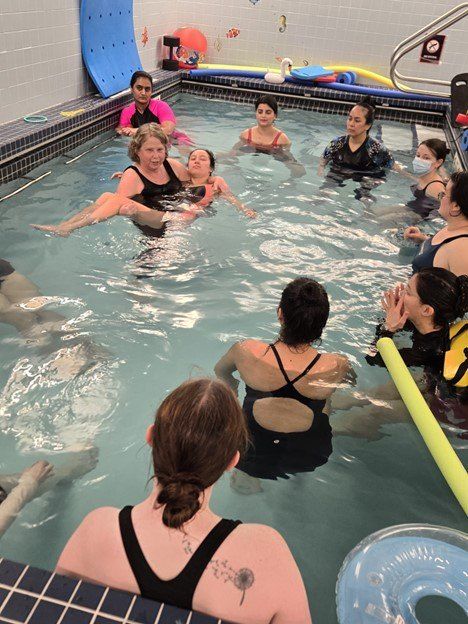
Several small lab studies show that exercising in water raises cerebral blood flow (CBF) more than the same work on land. Whether that translates into better thinking over time has not been tested in water yet.
Studies that measured CBF directly:
- Parfitt et al. (2017): This study demonstrated that aquatic treadmill exercise significantly increased middle cerebral artery blood flow velocity (MCAv) by 21% compared to 12% during land-based treadmill exercise, indicating a superior effect of aquatic exercise on CBF.[1]
- Carter et al. (2014): This study found that water immersion to the level of the right atrium increased cerebral perfusion, with significant increases in blood flow velocities in the middle and posterior cerebral arteries during immersion.[2]
- Carter et al. (2024): This study investigated the effects of water temperature on CBF during aquatic exercise. It found that cycle ergometry in 32°C water increased MCAv more than in 38°C water or land-based exercise, highlighting the importance of water temperature in optimizing CBF benefits.[3]
- Shirzad et al. (2022): This study showed that both active and passive exercise increased CBF through the middle cerebral artery, with passive exercise also providing a significant boost to executive function, suggesting that increased CBF may support cognitive benefits. Note that this study used passive cycling on land, not water.[4]
- Gonçalves et al. (2022): This randomized clinical trial evaluated the effect of a water-based physical exercise protocol on electroencephalographic activity in people with type 2 diabetes. EEG activity, blood glucose and walking capacity were maintained, with no clear difference between the exercise and control groups; CBF was not measured.[5]
Together, these small studies suggest that exercise in moderately warm water (around 32°C) raises brain blood flow more than land exercise, and that hotter water cancels the benefit. Whether this improves brain health over time is still an open question.
What the studies can and cannot tell us
- Small samples. The two key aquatic studies each tested 11 young, healthy adults, once.13
- Temperature matters. In 38°C water, core temperature rose about 0.8°C and blood flow velocity fell below the 32°C level, back to about land values.3
- Thinking. The executive-function benefit came from passive cycling on land, not from water exercise.4
So: promising physiology, no long-term trials yet of brain health or cognition after aquatic exercise.
Frequently asked questions
Does aquatic exercise increase cerebral blood flow more than land exercise?
Studies suggest it can: water-based exercise raised brain blood flow more than land exercise (Parfitt et al., 2017, Med Sci Sports Exerc, reference 1).
What affects cerebral blood flow during aquatic therapy?
The type of exercise and the water temperature both matter (Parfitt et al., 2017, Med Sci Sports Exerc, reference 1; Carter et al., 2024, Eur J Appl Physiol, reference 3).
References
References
- Randomized controlled trialParfitt R, Hensman MY, Lucas SJE. Cerebral Blood Flow Responses to Aquatic Treadmill Exercise. Med Sci Sports Exerc. 2017;49(7):1305-1312. doi:10.1249/MSS.0000000000001230. PubMed: 28166116.
- Carter HH, Spence AL, Pugh CJ, Ainslie P, Naylor LH, Green DJ. Cardiovascular responses to water immersion in humans: impact on cerebral perfusion. Am J Physiol Regul Integr Comp Physiol. 2014;306(9):R636-40. doi:10.1152/ajpregu.00516.2013. PubMed: 24553298.
- Carter HH, Pienaar O, Coleman A, et al. The effects of water temperature on cerebral blood flow during aquatic exercise. Eur J Appl Physiol. 2024;124(1):219-225. doi:10.1007/s00421-023-05264-7. PubMed: 37419991.
- Shirzad M, Tari B, Dalton C, Van Riesen J, Marsala MJ, Heath M. Passive exercise increases cerebral blood flow velocity and supports a postexercise executive function benefit. Psychophysiology. 2022;59(12):e14132. doi:10.1111/psyp.14132. PubMed: 35781673.
- Randomized controlled trialGonçalves GCV, Santos ATS, Calixto Júnior R, et al. Aquatic Exercise on Brain Activity in Type 2 Diabetic: Randomized Clinical Trial. Int J Environ Res Public Health. 2022;19(22):14759. doi:10.3390/ijerph192214759. PubMed: 36429477.
How to cite this article
First published June 27, 2024 on atuseminars.com · Last updated October 19, 2026 · Permanent URL: https://www.aquatictherapyuniversity.com/blog/aquatic-therapy-doesn-t-just-make-waves-it-boosts-brain
How to cite
ATU Librarian, Aquatic Therapy University. (2024, June 27). Aquatic Therapy Doesn't Just Make Waves—It Boosts Brain Power. From the Deep End (ATU Articles & Commentary). https://www.aquatictherapyuniversity.com/blog/aquatic-therapy-doesn-t-just-make-waves-it-boosts-brain
Permissions: You may quote and cite this article with attribution. Reproducing or adapting the full article requires written permission from ATU Educational Services, LLC.
Copyright: © 2024 ATU Educational Services, LLC.
For education only; not a substitute for individual clinical judgment.
In online learning, community participants create an interactive canvas of diverse reactions and feedback.
These learning experiences instill a sense of belonging and camaraderie that keeps online learners engaged and motivates them to persevere.
However, most instructors struggle to make learners participate in the discussion board because learners attend the courses in their time-space.
However, there are ways that you can use to gradually establish participation and, in the end, a real sense of community.