
From The Deep End · ATU Blog
Part 1 of 2Aquatic Plyometric Training: Safety and Effectiveness (Part 1 of 2)
Part 1: why water is a good place for plyometric training, how it compares with land-based plyometrics, and why water depth matters.
First published July 29, 2024 on atuseminars.comPlyometric jumping builds power, and done badly it builds soreness and injuries too. The pool offers a way to get the first without as much of the second.
Part 1 covers why water works and why depth matters.
Want to go deeper? Explore the 12 Ways to Progress Any Aquatic Exercise course →
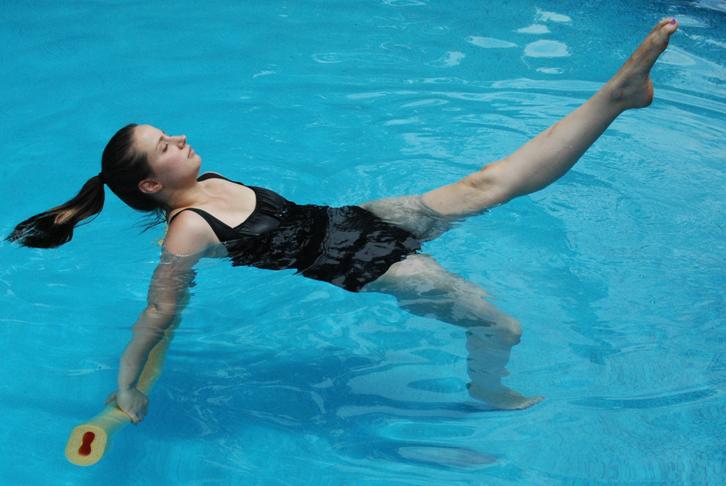
Plyometric training, widely utilized to enhance muscle power, is a series of exercises designed to achieve rapid muscle elongation followed by quick contraction. This type of conditioning has been well-documented in the medical literature to enhance dynamic muscle performances, such as vertical jump height,1 agility,2 isometric torque in knee extensors,3 and balance.4
However, plyometric training may cause inadvertent muscle soreness and injury when these high intensity exercises are not performed correctly.5 Overexertion and the lack of prior experience with plyometric training are common causes that enhance the chances of soreness/injury.
Aquatic plyometric training offers a solution to gaining muscle strength while reducing the risks associated with land-based plyometric exercises. The buoyancy of water lowers weight bearing on limbs leading to reduction in exercise-related physical stress. This article describes the advantages of performing aquatic plyometric training, different water conditions for these exercises and different training protocols that may be followed.
Water a Preferred Environment
In general, aquatic exercises are gaining popularity in recent times because the water environment provides numerous physiological benefits. The most obvious advantages of water-based exercises are reduced muscle/tendon/joint stress, greater involvement of muscles to help maintain balance in water, as well as greater muscle building power while working with the water resistance. In addition, certain circulatory and cardio-respiratory benefits6 are also observed with water exercises.
The reduced joint impact of aquatic training may be particularly beneficial for the elderly population. A study conducted in elderly women undergoing aquatic training for 24-weeks, showed improved isometric torques for knee extensors and knee flexors, grip strength and functional mobility (timed-up-and-go test).7
Similarly, patients with coronary artery disease have shown improvement in both exercise tolerance and muscular strength upon 4-months of water-based exercise program.8 In this study, the subjects also reported a favorable change in total cholesterol, triglycerides and body composition upon completion of the study.
Finally, aquatic training provides a safe environment for strength recovery during rehabilitation. Individuals with certain conditions that necessitate reduced joint stress may benefit from aquatic based training. In fact, the Osteoarthritis Research Society (OARSI), the American College of Rheumatology (ACR) and the European League Against Rheumatism (EULAR) support the use of aquatic exercise to control the symptoms of knee osteoarthritis.9 Article on Plyometrics 2
How effective is aquatic plyometrics?
Medical research has demonstrated that aquatic plyometric training is as effective as land-based methods in enhancing muscle performance. A study by Stemm et al10 sought to compare jump performance improvement following aquatic-based versus land-based plyometrics. College-age men were enrolled in the study and randomly divided into three groups—the aquatic training group, the land-based training group and the no-training group. The aquatic training group performed a series of jumping exercises (squat jumps, side hops and knee-tuck jumps) in knee-level water, while the land-based group performed identical exercises on land. Following a 6-week training period (2 sessions/week) it was observed that the vertical jump heights of both aquatic training group and land training group were significantly higher than that of the no-training group. Aquatic plyometric training also helps prevent muscle soreness compared with that observed in land-based training, as indicated by the levels of CPK, an inflammatory enzyme.11,12 In their study, Shiran et al11 used male wrestlers in a 5-week training period (aquatic vs. land) to demonstrate comparable increases in leg muscle strength.
Another study has compared aquatic vs. land plyometric training in young basketball players.13 This study concluded that aquatic plyometric training is as effective as land plyometric training in improving sprint performance, which requires explosive muscle power. However, the authors point out that improvement in dynamic balance was greater in the land training group compared with that of the aquatic training group. A possible explanation is that water provides a safer environment for training, and therefore does not optimally engage proprioceptive capabilities.
A comprehensive overview of the reduced impact of aquatic plyometric training is provided by Donoghue et al.14 Generally, the impact of a jump increases with increase in ground reaction force (GRF). These authors demonstrated that performing jumping exercises (ankle hop, tuck jumps, countermovement jump, single-leg vertical jump and drop jump) led to reduced peak GRFs and impulses in aquatic environment as compared with that on land. This finding supports and extends earlier evidence that showed reduced GRFs during double-leg squat jumps in water.15 Moreover, Donoghue et al14 demonstrated that the rate of force development for ankle hops, tuck jumps, and countermovement jump in water were significantly lower than those on land—an indication of reduced impact of jump.
How should water depth be selected?
The level of water used for aquatic plyometric training is a critical controlling factor in determining ease of exercise. Earlier studies have been conducted on chest- vs. waist-deep water for aquatic plyometric training. Miller et al16 observed no added benefit of aquatic training in chest- vs. waist-deep water with regard to average force and power with the squat, countermovement and vertical jumps. However, water levels above the waist will lead to greater difficulty to balance and increased drag through water. This may decrease the stretch-shortening cycle reaction time for plyometric jumps. Donoghue et al14 used a1.3 meter water depth to observe significant reductions in peak GRFs during aquatic plyometric training compared with land-based training. Moreover, Stemm et al’s10 previous study proved the effectiveness of knee-deep water for aquatic plyometric training. Therefore, the existing literature data supports the usage of knee- to waist-deep water for aquatic plyometric training sessions.
Continued in Part 2. Read Part 2.
What newer research says
- A 2022 systematic review of 19 randomized trials (633 participants) found aquatic plyometrics usually matched land plyometrics for strength, vertical jump and sprint gains, and 2 of 3 studies that tracked soreness found less of it after water training.22
Most trials are small and in young, healthy people.
Frequently asked questions
How effective is aquatic plyometric training?
Research suggests it improves muscle performance about as well as land-based plyometrics (Aquatic Therapy University, 2024).
How should water depth be selected for aquatic plyometrics?
Depth largely controls how easy the exercise is; one study found chest-deep water added no benefit over waist-deep water for force and power (Aquatic Therapy University, 2024).
References
References (shared with Part 2)
- Systematic review and meta-analysisMarkovic G. Does plyometric training improve vertical jump height? A meta-analytical review. Br J Sports Med. 2007;41(6):349-55; discussion 355. doi:10.1136/bjsm.2007.035113. PubMed: 17347316.
- Miller MG, Herniman JJ, Ricard MD, Cheatham CC, Michael TJ. The effects of a 6-week plyometric training program on agility. J Sports Sci Med. 2006;5(3):459-65. PubMed: 24353464.
- Váczi M, Tollár J, Meszler B, Juhász I, Karsai I. Short-term high intensity plyometric training program improves strength, power and agility in male soccer players. J Hum Kinet. 2013;36:17-26. doi:10.2478/hukin-2013-0002. PubMed: 23717351.
- Randomized controlled trialMyer GD, Ford KR, Brent JL, Hewett TE. The effects of plyometric vs. dynamic stabilization and balance training on power, balance, and landing force in female athletes. J Strength Cond Res. 2006;20(2):345-53. doi:10.1519/R-17955.1. PubMed: 16686562.
- Trade articleGrantham N. Plyometrics and sports injuries. Sports Injury Bulletin. 2006. (Trade newsletter; the online article is no longer available.)
- Mateescu A. Study on the effects of aquatic vs. dry land combined contractions on muscle strength for the students in physical education and sport. J Phys Educ Sport. 2010;27(2):72-77.
- Randomized controlled trialTsourlou T, Benik A, Dipla K, Zafeiridis A, Kellis S. The effects of a twenty-four-week aquatic training program on muscular strength performance in healthy elderly women. J Strength Cond Res. 2006;20(4):811-8. doi:10.1519/R-18455.1. PubMed: 17194242.
- Randomized controlled trialVolaklis KA, Spassis AT, Tokmakidis SP. Land versus water exercise in patients with coronary artery disease: effects on body composition, blood lipids, and physical fitness. Am Heart J. 2007;154(3):560.e1-6. doi:10.1016/j.ahj.2007.06.029. PubMed: 17719306.
- Randomized controlled trialYázigi F, Espanha M, Vieira F, Messier SP, Monteiro C, Veloso AP. The PICO project: aquatic exercise for knee osteoarthritis in overweight and obese individuals. BMC Musculoskelet Disord. 2013;14:320. doi:10.1186/1471-2474-14-320. PubMed: 24219758.
- Randomized controlled trialStemm JD, Jacobson BH. Comparison of land- and aquatic-based plyometric training on vertical jump performance. J Strength Cond Res. 2007;21(2):568-71. doi:10.1519/R-20025.1. PubMed: 17530969.
- Shiran MY, Kordi MR, Ziaee V, Ravasi AA, Mansournia MA. The effect of aquatic and land plyometric training on physical performance and muscular enzymes in male wrestlers. Res J Biol Sci. 2008;3(5):457-461.
- ThesisShaffer JD. The effects of a six-week land-based and aquatic-based plyometric training program on power, peak torque, agility, and muscle soreness [master’s thesis]. West Virginia University; 2007. doi:10.33915/etd.10989.
- Arazi H, Asadi A. The effect of aquatic and land plyometric training on strength, sprint, and balance in young basketball players. J Hum Sport Exerc. 2011;6(1):101-111. doi:10.4100/jhse.2011.61.12.
- Donoghue OA, Shimojo H, Takagi H. Impact forces of plyometric exercises performed on land and in water. Sports Health. 2011;3(3):303-9. doi:10.1177/1941738111403872. PubMed: 23016022.
- Randomized controlled trialColado JC, Garcia-Masso X, González LM, Triplett NT, Mayo C, Merce J. Two-leg squat jumps in water: an effective alternative to dry land jumps. Int J Sports Med. 2010;31(2):118-22. doi:10.1055/s-0029-1242814. PubMed: 20222004.
- Miller MG, Cheatham CC, Porter AR, Ricard MD, Hennigar D, Berry DC. Chest- and waist-deep aquatic plyometric training and average force, power, and vertical-jump performance. Int J Aquatic Res Educ. 2007;1(2). doi:10.25035/ijare.01.02.06.
- Sinsurin K, Vachalathiti R, Jalayondeja W, Limroongreungrat W. Different Sagittal Angles and Moments of Lower Extremity Joints during Single-leg Jump Landing among Various Directions in Basketball and Volleyball Athletes. J Phys Ther Sci. 2013;25(9):1109-13. doi:10.1589/jpts.25.1109. PubMed: 24259925.
- Cortes N, Onate J, Abrantes J, Gagen L, Dowling E, Van Lunen B. Effects of gender and foot-landing techniques on lower extremity kinematics during drop-jump landings. J Appl Biomech. 2007;23(4):289-99. doi:10.1123/jab.23.4.289. PubMed: 18089927.
- Howard JS, Fazio MA, Mattacola CG, Uhl TL, Jacobs CA. Structure, sex, and strength and knee and hip kinematics during landing. J Athl Train. 2011;46(4):376-85. doi:10.4085/1062-6050-46.4.376. PubMed: 21944069.
- Roesler H, Haupenthal A, Schütz GR, de Souza PV. Dynamometric analysis of the maximum force applied in aquatic human gait at 1.3m of immersion. Gait Posture. 2006;24(4):412-7. doi:10.1016/j.gaitpost.2005.09.014. PubMed: 16716592.
- Randomized controlled trialRobinson LE, Devor ST, Merrick MA, Buckworth J. The effects of land vs. aquatic plyometrics on power, torque, velocity, and muscle soreness in women. J Strength Cond Res. 2004;18(1):84-91. doi:10.1519/1533-4287(2004)018<0084:teolva>2.0.co;2. PubMed: 14971978.
Newer research
- Systematic reviewHeywood SE, Mentiplay BF, Rahmann AE, et al. The Effectiveness of Aquatic Plyometric Training in Improving Strength, Jumping, and Sprinting: A Systematic Review. J Sport Rehabil. 2022;31(1):85-98. doi:10.1123/jsr.2020-0432. PubMed: 34564070.
How to cite this article
First published July 29, 2024 on atuseminars.com · Last updated October 19, 2026 · Permanent URL: https://www.aquatictherapyuniversity.com/blog/aquatic-plyometric-training-safety-and-effectiveness-part-1
How to cite
Aquatic Therapy University. (2024, July 29). Aquatic Plyometric Training: Safety and Effectiveness (Part 1 of 2). Aquatic Therapy University Blog. ATU Educational Services, LLC. https://www.aquatictherapyuniversity.com/blog/aquatic-plyometric-training-safety-and-effectiveness-part-1
Permissions: You may quote and cite this article with attribution. Reproducing or adapting the full article requires written permission from ATU Educational Services, LLC.
For education only; not a substitute for individual clinical judgment.