
From The Deep End · ATU Blog
10 Evidence-Based Aquatic Therapy Applications for Autism from Aquatic Therapy University
Ten practical, research-backed recommendations for aquatic therapy with autistic children, from session structure and cues to dosing and outcome measures.
Ten choices you can make in your next aquatic session with an autistic child, each tied to a study. Where the research is thin, we say so.
Want to go deeper? Explore the Evidence-Based Aquatic Therapy for Autism Spectrum Disorders course →
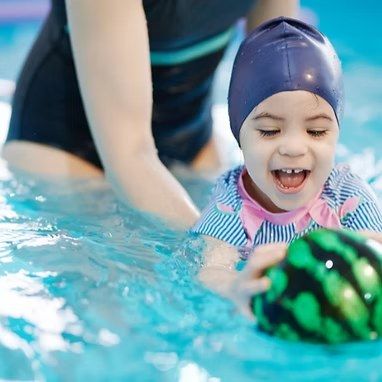
#1. Autism Spectrum Disorder (ASD)
Use a phased multisystem approach (emotional adaptation → swimming adaptation → social integration) rather than focusing solely on swimming skills, as this produces significant improvements in functional adaptation, emotional response, and activity level (Caputo et al., 2018).
Implement the Halliwick method for developing aquatic skills and gross motor function, as it demonstrates measurable improvements in water orientation and motor abilities in children with ASD (Vodakova et al., 2022).
Prioritize aquatic exercise for behavioral problems over other exercise modalities, as network meta-analysis shows aquatic exercise is most effective for improving behavioral symptoms in developmental disorders (SUCRA = highest ranking) (Jia et al., 2024).
Structure sessions to address mental adjustment, water environment adaptation, rotation, balance/control, and independent movement as these HAAR checklist domains show the largest effect sizes (SMD = 0.63-2.09) compared to land-based exercises (Shariat et al., 2024).
Embed social integration activities within aquatic sessions rather than adding them separately, as the aquatic environment naturally facilitates social skill development when integrated into the treatment protocol (Caputo et al., 2018).
Use external focus instructions ("watch the ball float") rather than internal focus ("move your arms like this") to enhance motor learning regardless of the child's working memory capacity (van der Veer et al., 2022).
Provide one-to-one teaching in a fun atmosphere with qualified instructors and warm water [Expert opinion]. Drowning is a leading cause of injury death in children, so build water safety into every program (Denny et al., 2021).
Progress from individual activities to group-based social tasks systematically, as the multisystem approach demonstrates that social integration is most effective after emotional and swimming adaptation phases are established (Caputo et al., 2018).
Monitor and document improvements in functional adaptation using standardized measures (Vineland Adaptive Behavior Scales, CARS) rather than only swimming proficiency, as functional gains are the primary therapeutic target (Caputo et al., 2018).
Plan for a long program. The gains in Caputo’s trial came after 10 months (Caputo et al., 2018). Trials in the 2024 review varied in length (Shariat et al., 2024), so 2 to 3 sessions a week is a sensible starting plan, not a proven rule [Expert opinion].
What newer research adds
- A 2024 systematic review of 19 intervention studies (429 children aged 3 to 17) found that aquatic programs led by a mix of professionals in behavior and aquatic skills improved motor and social skills and reduced autistic behavior (van ’t Hooft et al., 2024).
Most trials are small, and program length varies widely, so no one knows the minimum effective dose yet.
Frequently asked questions
What approach works best for aquatic therapy with autistic children?
A staged program that builds emotional comfort first, then water skills, then social integration; it improved functional adaptation, emotional response and activity level (Caputo et al., 2018).
How should progress be measured in aquatic therapy for autism?
With standardized measures of functional adaptation, such as the Vineland Adaptive Behavior Scales and CARS, because function rather than swim proficiency is the main goal (Caputo et al., 2018).
When should group social tasks be introduced?
Once the child has settled emotionally and adapted to swimming, since social integration works best after those phases (Caputo et al., 2018).
References
References
- Caputo G, Ippolito G, Mazzotta M, et al. Effectiveness of a Multisystem Aquatic Therapy for Children with Autism Spectrum Disorders. J Autism Dev Disord. 2018;48(6):1945-1956. doi:10.1007/s10803-017-3456-y. PubMed: 29313176.
- Denny SA, Quan L, Gilchrist J, et al. Prevention of Drowning. Pediatrics. 2021;148(2):e2021052227. doi:10.1542/peds.2021-052227. PubMed: 34253571.
- Jia M, Hu F, Yang D. Effects of different exercise modalities on pediatric and adolescent populations with developmental disorders: a network meta-analysis of randomized controlled trials. Eur J Pediatr. 2024;184(1):18. doi:10.1007/s00431-024-05858-z. PubMed: 39546034.
- Systematic review and meta-analysisShariat A, Najafabadi MG, Dos Santos IK, et al. The Effectiveness of Aquatic Therapy on Motor and Social Skill as Well as Executive Function in Children With Neurodevelopmental Disorder: A Systematic Review and Meta-analysis. Arch Phys Med Rehabil. 2024;105(5):1000-1007. doi:10.1016/j.apmr.2023.08.025. PubMed: 37690741.
- Systematic reviewvan der Veer IPA, Verbecque E, Rameckers EAA, Bastiaenen CHG, Klingels K. How can instructions and feedback with external focus be shaped to enhance motor learning in children? A systematic review. PLoS One. 2022;17(8):e0264873. doi:10.1371/journal.pone.0264873. PubMed: 36007080.
- Vodakova E, Chatziioannou D, Jesina O, Kudlacek M. The Effect of Halliwick Method on Aquatic Skills of Children with Autism Spectrum Disorder. Int J Environ Res Public Health. 2022;19(23):16250. doi:10.3390/ijerph192316250. PubMed: 36498324.
Newer research
- Reviewvan T Hooft P, Moeijes J, Hartman C, van Busschbach J, Hartman E. Aquatic Interventions to Improve Motor and Social Functioning in Children with ASD: A Systematic Review. Rev J Autism Dev Disord. 2026;13(3):751-771. doi:10.1007/s40489-024-00464-z. PubMed: 42756010.
How to cite this article
First published April 6, 2026 on atuseminars.com · Last updated October 19, 2026 · Permanent URL: https://www.aquatictherapyuniversity.com/blog/10-evidence-based-aquatic-therapy-applications-for-autism
How to cite
Aquatic Therapy University. (2026, April 6). 10 Evidence-Based Aquatic Therapy Applications for Autism from Aquatic Therapy University. Aquatic Therapy University Blog. ATU Educational Services, LLC. https://www.aquatictherapyuniversity.com/blog/10-evidence-based-aquatic-therapy-applications-for-autism
Permissions: You may quote and cite this article with attribution. Reproducing or adapting the full article requires written permission from ATU Educational Services, LLC.
For education only; not a substitute for individual clinical judgment.